Coppery-Tailed Trogon of Arizona: A Colorful Canyon Bird
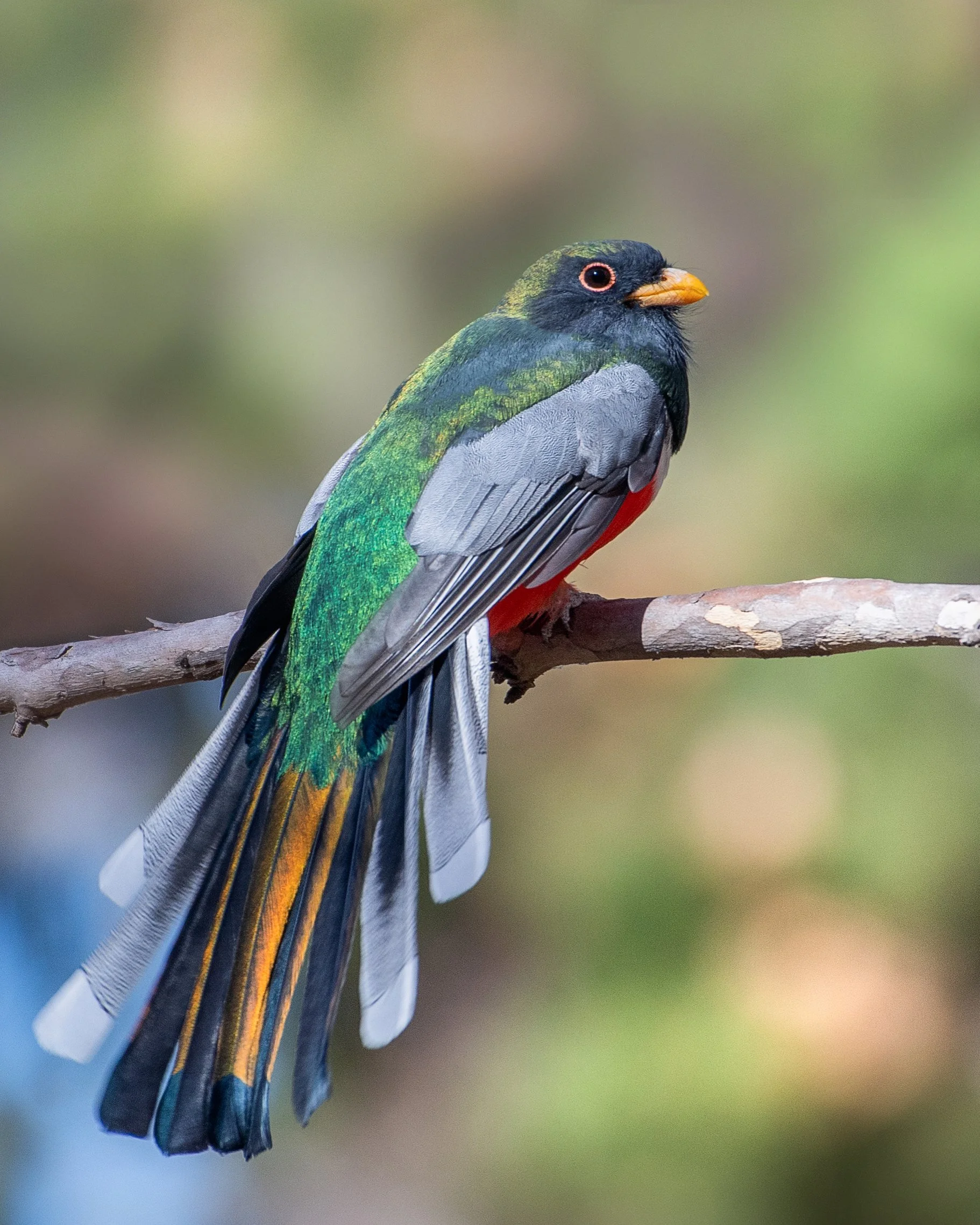
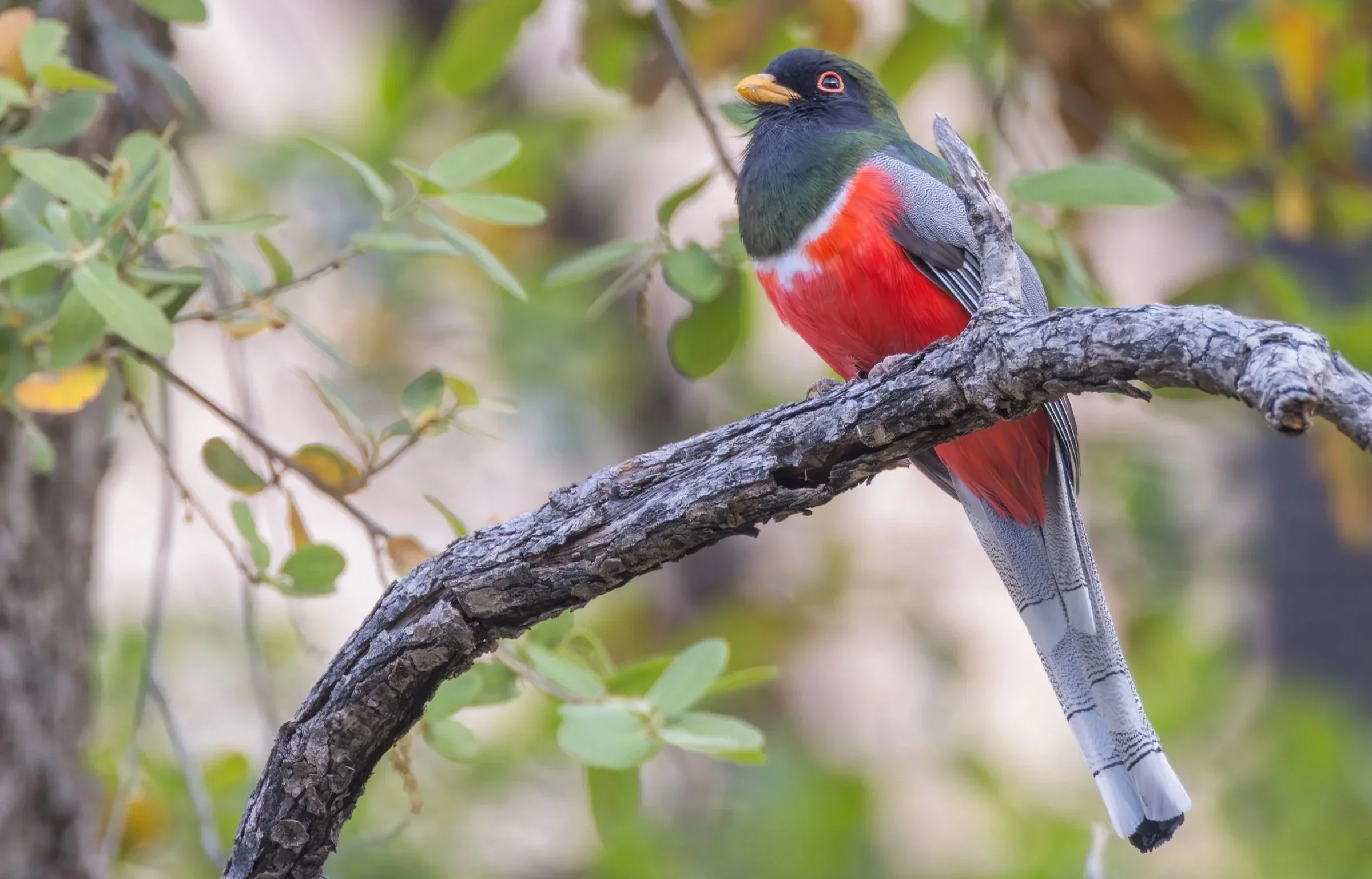
Seeing a Coppery-tailed Trogon (Trogon ambiguus) for the first time makes a strong impression. Their deep red belly, green back, and quiet presence stand out in the shaded canyons of southeast Arizona. Their sharp, repeated bark often gives them away before you spot them, and whenever reports start coming in, birders from across the country head to these canyons hoping for a glimpse. Coppery-tailed Trogons thrive in riparian woodlands where cool air, tall sycamores, and abundant insects create the conditions they need to nest and feed.
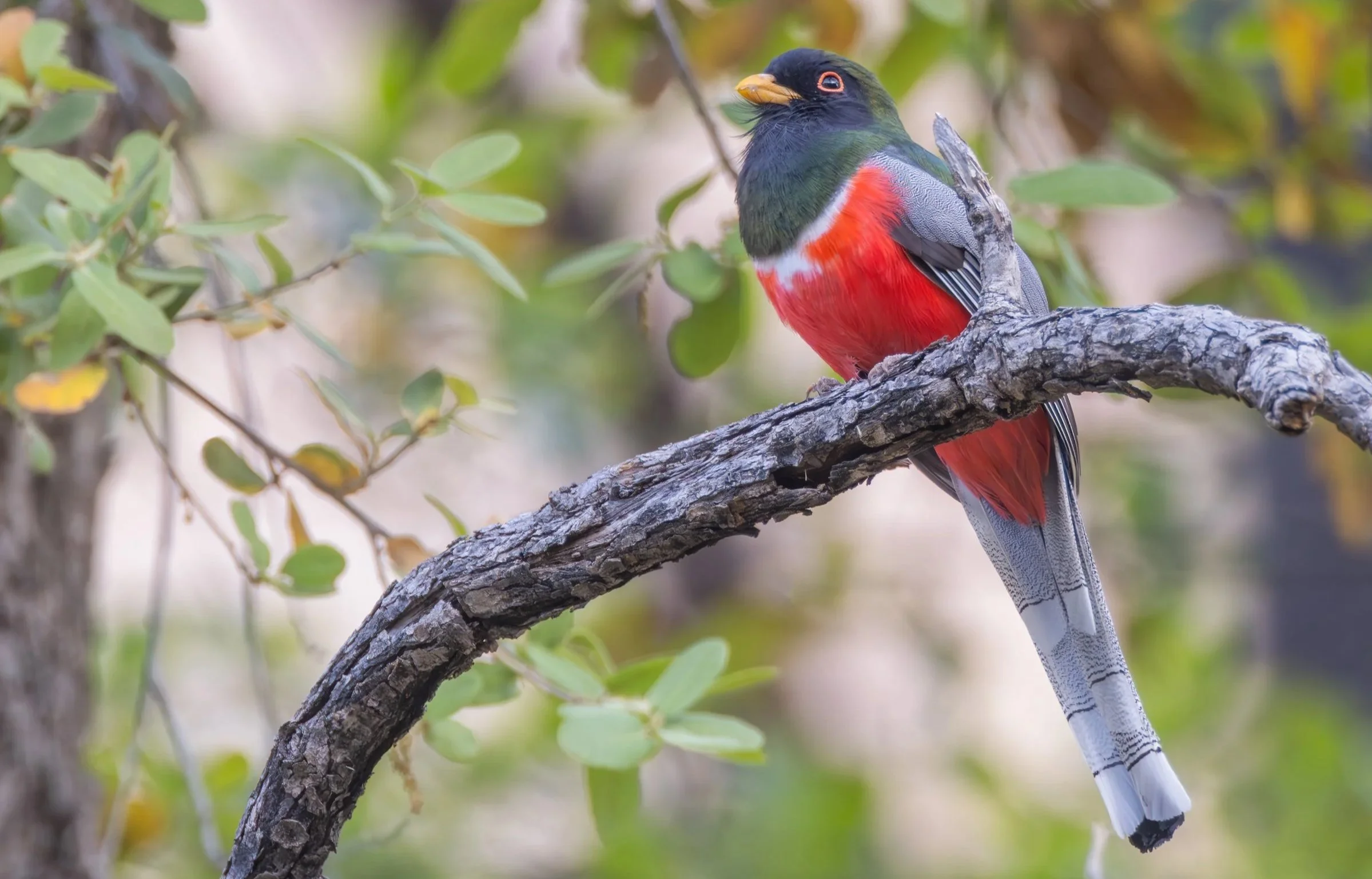
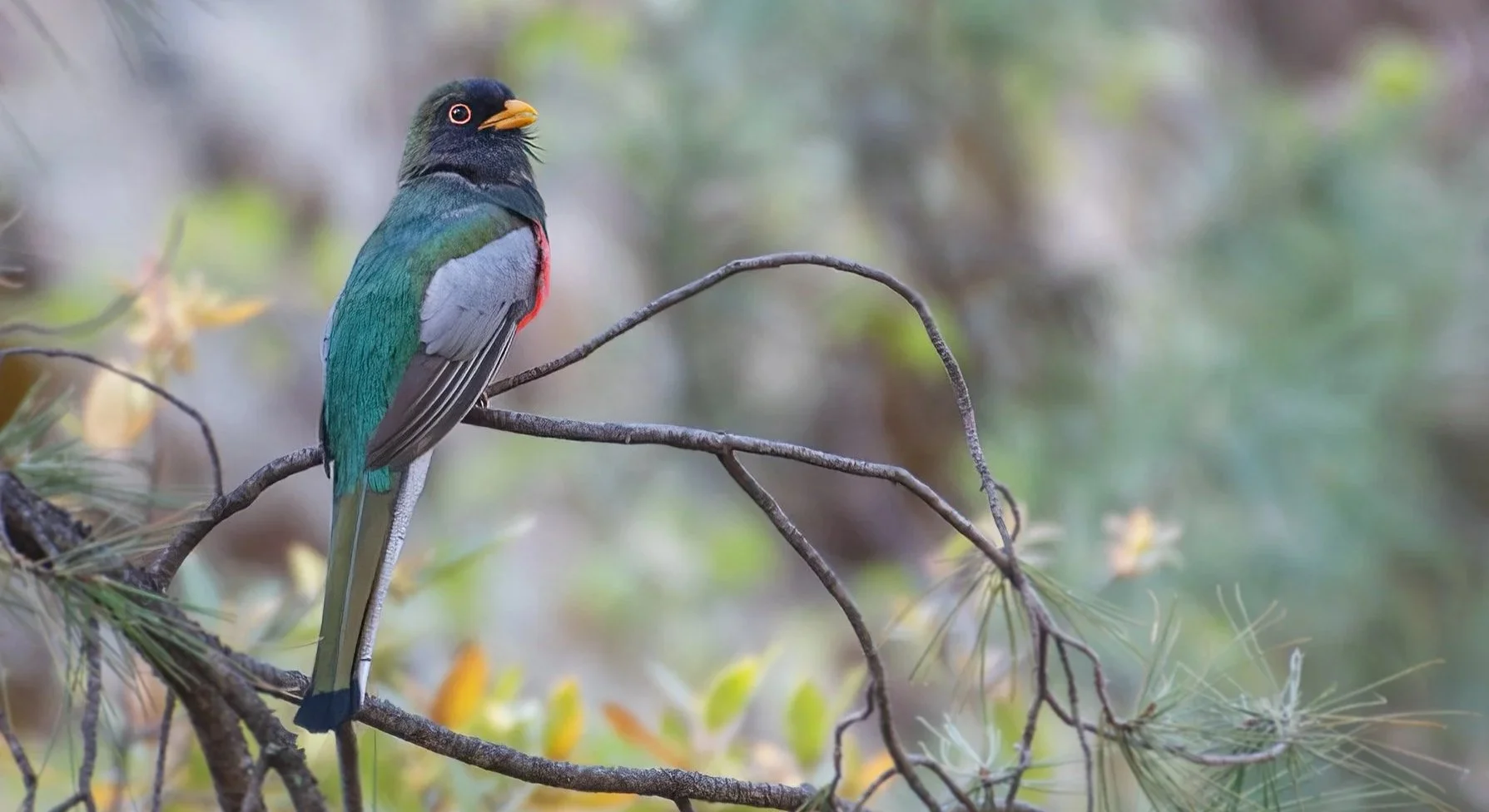
A resting Coppery-tailed Trogon shows its deep green back and alert gaze from a shaded branch. Photo by Jenny Bowlden.
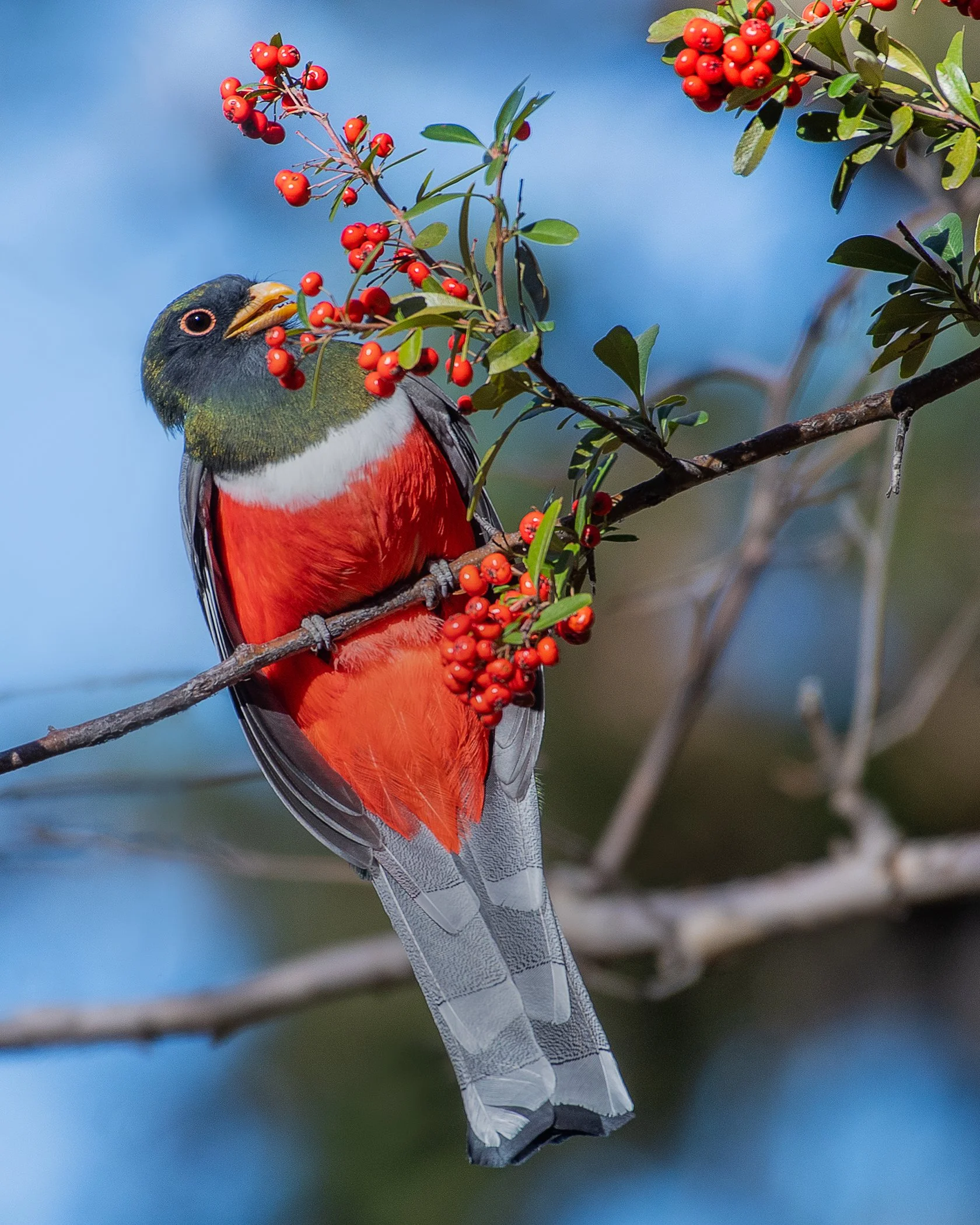
Coppery-tailed Trogon reaching for pyracantha berries, a favorite seasonal treat in southeast Arizona. Photo by Jenny Bowlden.
Nine Fun Facts About Coppery-tailed Trogons
They are one of the most sought-after birds in the American Southwest. Coppery-tailed Trogons draw birders and photographers from around the world, especially to southern Arizona, where they reach the northern edge of their range.
Their call is unmistakable. The sharp, repeated “cawwwk” has a barking quality that often gives them away long before you spot their bright colors.
They prefer shady, cool habitats. They live in riparian woodlands and shaded canyons where sycamores, cottonwoods, and oaks offer food and nest sites.
Their colors are more vivid in person than any photo suggests. Males show a metallic green back, bright red belly, and sharp white chest band. Females have subtler tones but are equally striking.
They nest in old woodpecker cavities. They rely on abandoned holes created by northern flickers and Arizona woodpeckers, usually in soft or decaying trees.
Their northern migration stops in Arizona. Coppery-tailed Trogons are primarily birds of Mexico and Central America, which makes Arizona a rare place to see them. A recent species split adds to the story. Birds in Central America keep the Elegant Trogon name, while the ones across Mexico and occasionally southern Arizona are now recognized as Coppery-tailed Trogons.
They feed in short bursts of activity. Trogons often perch quietly, then dart out to snatch insects or small fruits before returning to the same branch.
They flick their tails when alert or excited. This gentle up-and-down movement is a helpful clue when scanning dense foliage for them.
Seeing one feels like a milestone moment. For many photographers, capturing a Coppery-tailed Trogon in southeast Arizona is a bucket-list experience.
Where We See Coppery-tailed Trogons on Our Tours
Coppery-tailed Trogons may be seen on our Arizona bird photography tours, especially in the canyons and riparian areas of southeast Arizona. Their preferred habitats include oak- and sycamore-lined areas in places such as Madera Canyon, Patagonia, Ramsey Canyon, and the Chiricahua Mountains. Join us in April of 2027 for a chance to photograph this bird and many other species on our SE Arizona photo tour.
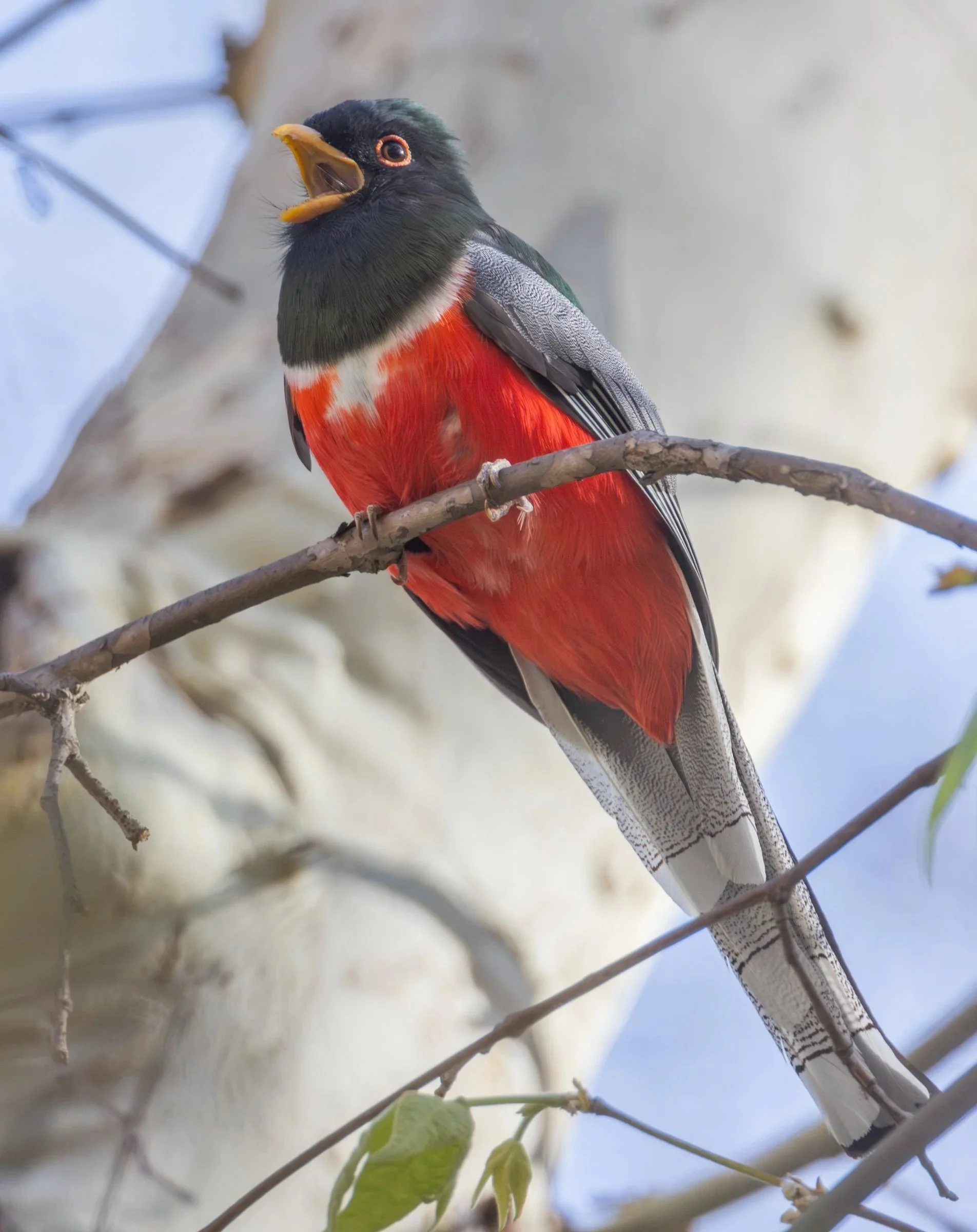
Coppery-tailed Trogon mid-call, its distinctive bark carrying through the quiet canyon.
Tips for Spotting and Photographing Coppery-tailed Trogons
Best times: Early morning when they are vocal and more active. In southeast Arizona, most Coppery-tailed Trogons are present from spring through early fall, with peak activity during late spring and early summer. A small number now overwinter, and they can be seen into late fall and December in areas like Madera Canyon, especially when pyracantha bushes are full of ripe berries.
Where to look: Shaded creek beds, sycamore stands, and quiet canyon trails in southeast Arizona.
Photography tip: Patience is key. Coppery-tailed Trogons often sit motionless in deep shade, so watch for subtle movements like tail flicks or shifts in posture. A long lens and steady hand help when they perch high or stay tucked into branches.
Composition: Use surrounding trees and soft canyon light to frame the bird. When a trogon is perched low or in brighter conditions, the contrast of red and green plumage can make for beautiful portraits. In winter, when pyracantha bushes are full of bright berries, be patient and look for chances to frame the bird within the colorful branches. The warm reds and oranges of the fruit can add depth and a seasonal touch to the image.
Coppery-tailed Trogons are listed as Least Concern by the IUCN, with stable populations across most of their range in Mexico and Central America. Their presence in the United States is limited to a small breeding population in southeast Arizona, which makes this edge-of-range group more sensitive to habitat changes. Protecting riparian forests and preserving mature trees with nesting cavities remain important for their long-term stability in the region.