
Bear Behavior and Safety: What Photographers Need to Know
Photographing bears during one of our photo tours or workshops can be one of the most powerful wildlife experiences. Seeing their size, strength, and awareness in a wild setting leaves a lasting impression. But with that opportunity comes responsibility. Bear photography must always prioritize safety and respect, for you and the animal.
At Slonina Photography, our approach is simple. We never put ourselves or a bear in a risky situation for the sake of an image. The photograph is never more important than the well-being of the animal or the people around it. That philosophy comes from decades of experience in bear habitat. John Slonina has spent years in places like Yellowstone and Alaska observing and photographing bears, leading dozens of tours and developing a strong understanding of their behavior and how to position groups safely in the field.
Feeling Comfortable in Bear Country
For many people, the idea of photographing bears comes with some hesitation. That’s completely normal. Bears are large, powerful animals, and the unknown can feel intimidating at first.
The reality is that bear encounters, when approached correctly, are far less risky than most people expect. Millions of people spend time in bear habitat every year without incident.
With the right approach, awareness, and guidance, photographing bears becomes a controlled and rewarding experience rather than a risky encounter.
Distance Is Non Negotiable
You should never be close to a bear. This is true for obvious safety reasons, but it is just as important from a respect standpoint. Bears are wild animals that need space to move, feed, rest, and interact naturally. Getting too close can cause stress, change their behavior, or force them to react defensively.
When a bear alters what it is doing because a human is nearby, the situation has already gone too far. Responsible wildlife photography means observing, not interfering.

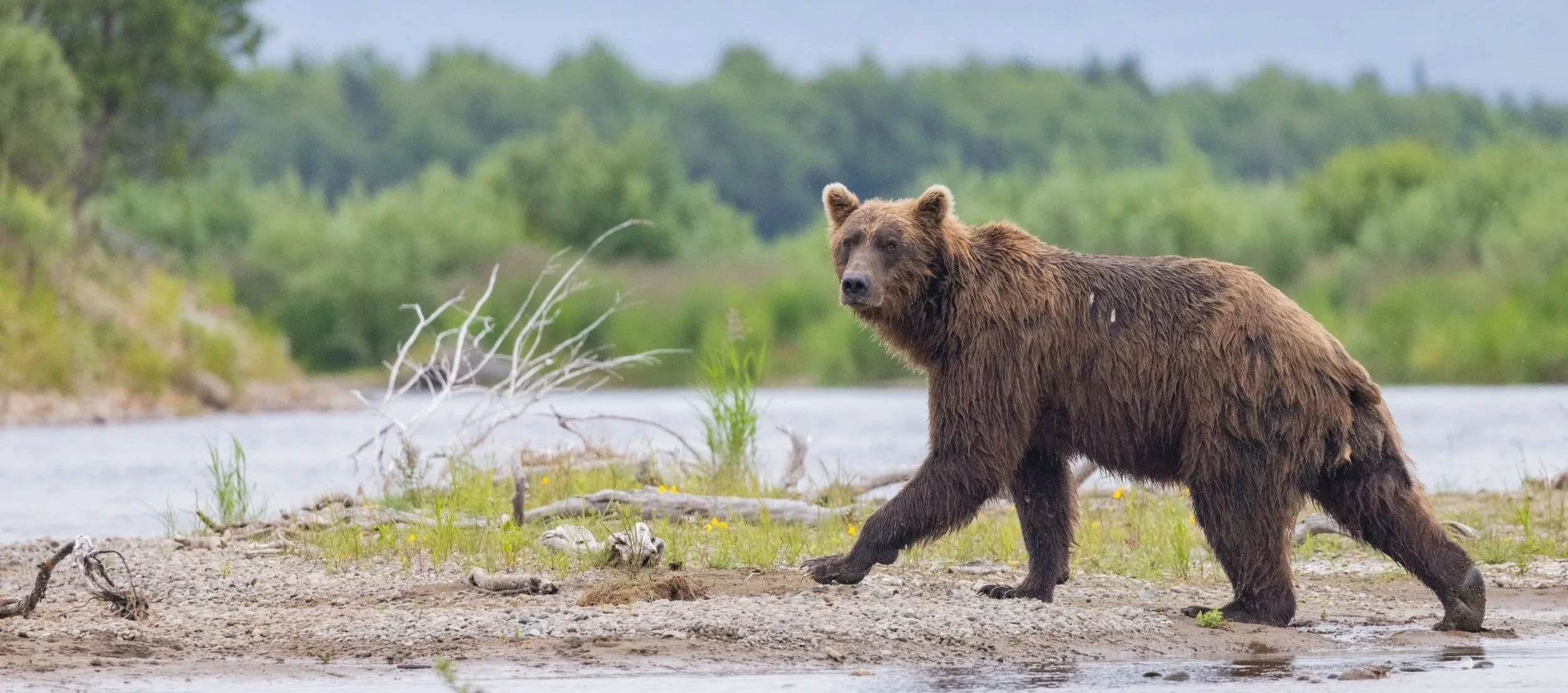
Using a long lens allowed us to photograph this bear naturally, without altering its behavior.
Long Lenses Are the Right Tool
The best bear photographs are taken with long lenses, not in close proximity. Telephoto lenses allow you to capture detail, emotion, and behavior while maintaining a safe and ethical distance.
All of the bear images we share are made this way. We do not approach bears, crowd them, or intentionally move closer to improve a composition. We let the animal set the terms, and we work within those limits. This results in more natural behavior and stronger photographs that tell a true story of life in the wild.
If a bear moves farther away, we let it go. If it comes closer on its own, we still maintain space and remain alert. Distance is always your safety margin.

Black bear, Canadian Rockies.
Reading Bear Behavior
Understanding basic bear behavior helps you recognize when a situation is safe and when it’s time to step back. Most bears will ignore people at a distance, especially if they are focused on feeding or moving through an area.
Many strong bear photographs include moments where the animal is looking in your direction. That alone is not a concern. The key is whether the bear continues to behave naturally.
If a bear begins to change its movement, avoids an area, or shows signs of stress such as huffing, jaw popping, or pacing, it is reacting to your presence. These are cues to give the animal more space.
The goal is to observe natural behavior. As long as the bear continues to act naturally, you are in a good position. If that changes, it’s time to step back.
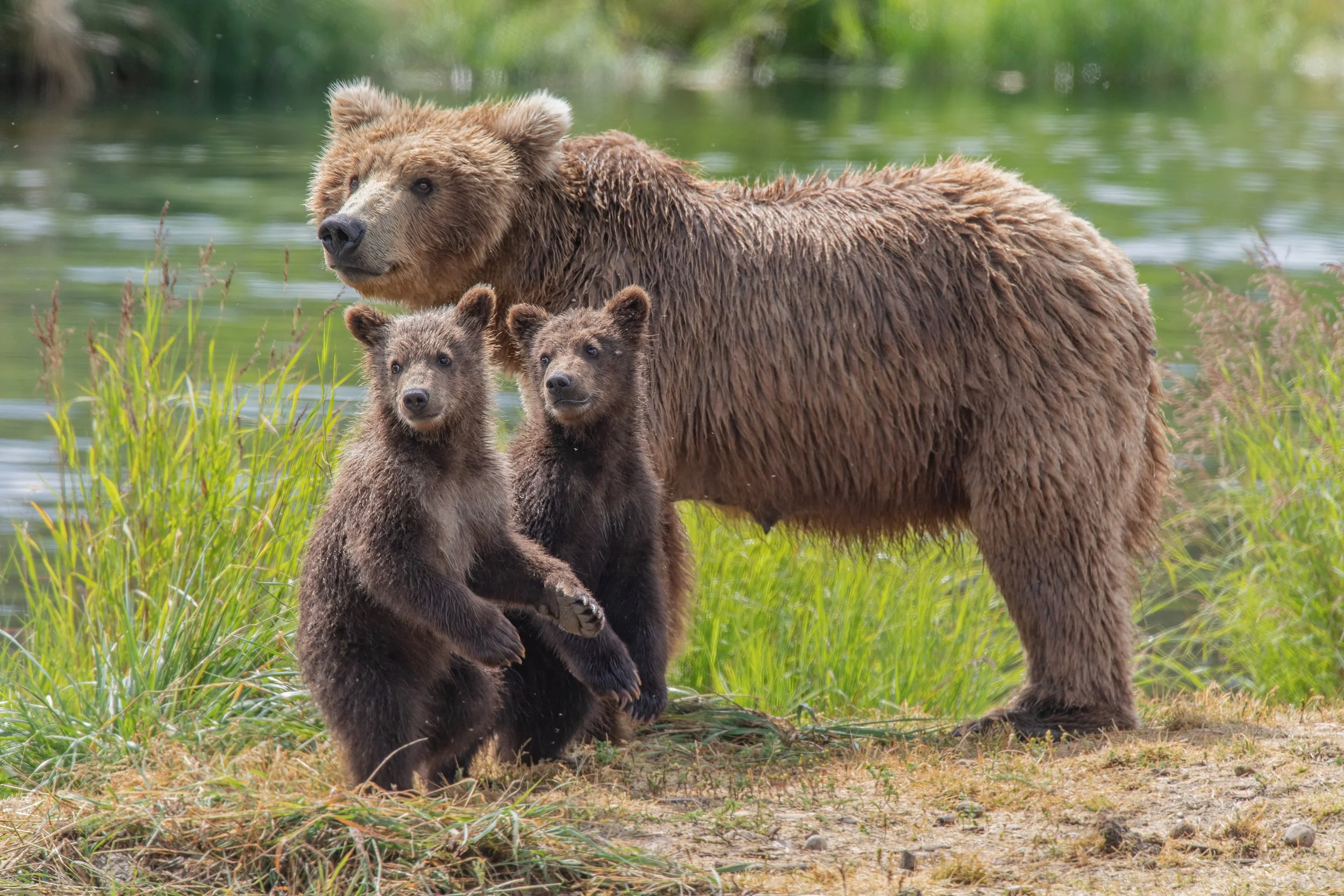
Brown bear with cubs, Alaska.
Positioning and Awareness in the Field
Where you stand matters just as much as how far away you are. Avoid placing yourself between a bear and a food source, a travel route, or cubs. These situations can create pressure and increase the chance of a defensive reaction.
Always be aware of your surroundings. Pay attention to wind direction, other bears that may be nearby, and avoid getting so focused on your camera that you lose awareness of what is happening around you.
When working in a group, staying together and communicating clearly helps everyone stay aware and reduce unnecessary movement that could disturb wildlife.

Safety in Numbers
Across all verified North American data, there are zero documented fatal bear attacks on groups of three or more people traveling or recreating together. Fatal incidents have involved individuals or, in some cases, two people, but never groups of three or more.
This is one reason staying together as a group is such an important part of bear safety. Groups are easier for bears to detect, make more noise, and are less likely to surprise a bear at close range.
Bear Attacks Are Rare, But Respect Is Essential
Bear attacks are extremely rare. Your odds of being attacked are roughly 1 in 2.1 million, and across North America, fatal bear attacks average only 2 to 3 per year.
To put that in perspective:
Lightning causes roughly 20 to 30 deaths per year in the United States.
Dogs cause roughly 40 or more deaths per year.
More than 39,000 people die in motor vehicle crashes each year.
Heart disease causes more than 680,000 deaths each year.
Despite the perception, millions of people visit bear country every year without incident.
Part of the reason bear risk feels higher than it is comes down to perception. People tend to focus on rare, dramatic events and overlook more common, everyday risks.
None of this means bears should be taken lightly. They are powerful animals, and situations can change quickly if boundaries are crossed. Most negative encounters happen when bears feel surprised, threatened, or pressured.
Keeping distance, staying aware, and behaving predictably all reduce risk. Respectful behavior protects people, and it also protects bears from being labeled as dangerous due to human mistakes.

Setting the Right Example
Photography plays a role in how people view and treat wildlife. Images that appear to be taken from very close range can unintentionally encourage risky behavior. That is why it matters to be transparent about how photographs are made.
We are clear about our practices. Our bear photographs are created using long lenses, from safe distances, and without pushing limits. We would never intentionally get close to a bear to make an image.
What to Bring in Bear Country
Preparation matters just as much as awareness. A few simple items can make a big difference when you are spending time in bear habitat.
Bear spray, where appropriate and permitted
A comfortable camera strap to keep your gear secure and controlled
Neutral clothing that does not draw unnecessary attention
A mindset focused on awareness, patience, and respect
Experience in the Field
Our approach is built on extensive time working in bear habitat, led by John Slonina’s decades of field experience.
In the Greater Yellowstone ecosystem, John has led around 30 tours and spends an average of 7 to 8 weeks each year photographing and observing bears in a variety of conditions.
In Alaska, he has completed over 40 trips and led more than 30 tours, spending roughly 8 weeks each year in the field working around coastal brown bears.
That level of consistent, long-term exposure provides a deep understanding of bear behavior, movement patterns, and how to position groups safely and responsibly. It’s this experience that shapes how every tour is run and how decisions are made in the field.

Black bear with cubs, Alaska.
Respecting Wildlife and Supporting Conservation
Bears are a keystone species in many ecosystems. They shape landscapes, support food webs, and reflect the health of wild places. Respecting bears means respecting all wildlife.
Ethical photography supports conservation by showing animals behaving naturally in intact habitats. It reminds people why these places matter and why they deserve protection. When we give wildlife space, follow regulations, and act responsibly, we help ensure future generations can experience these animals in the wild.
Great wildlife photography starts with respect. Safety, patience, and distance are not limitations. They are the foundation of doing it right.
Two Paths to Wild Beauty.
We are one team of photography experts offering tours through two dedicated websites, ensuring you get the most specialized experience possible.
Explore Alaska Adventures: Your source for exclusive Alaskan photo tours, from private yachts to intimate bear encounters.
Slonina Nature Photography: Your guide to award-winning workshops in North America's most iconic parks, like Yellowstone and the Canadian Rockies.
One team, one mission, two websites to begin your next adventure.