
Manatees: Gentle Giants of Florida
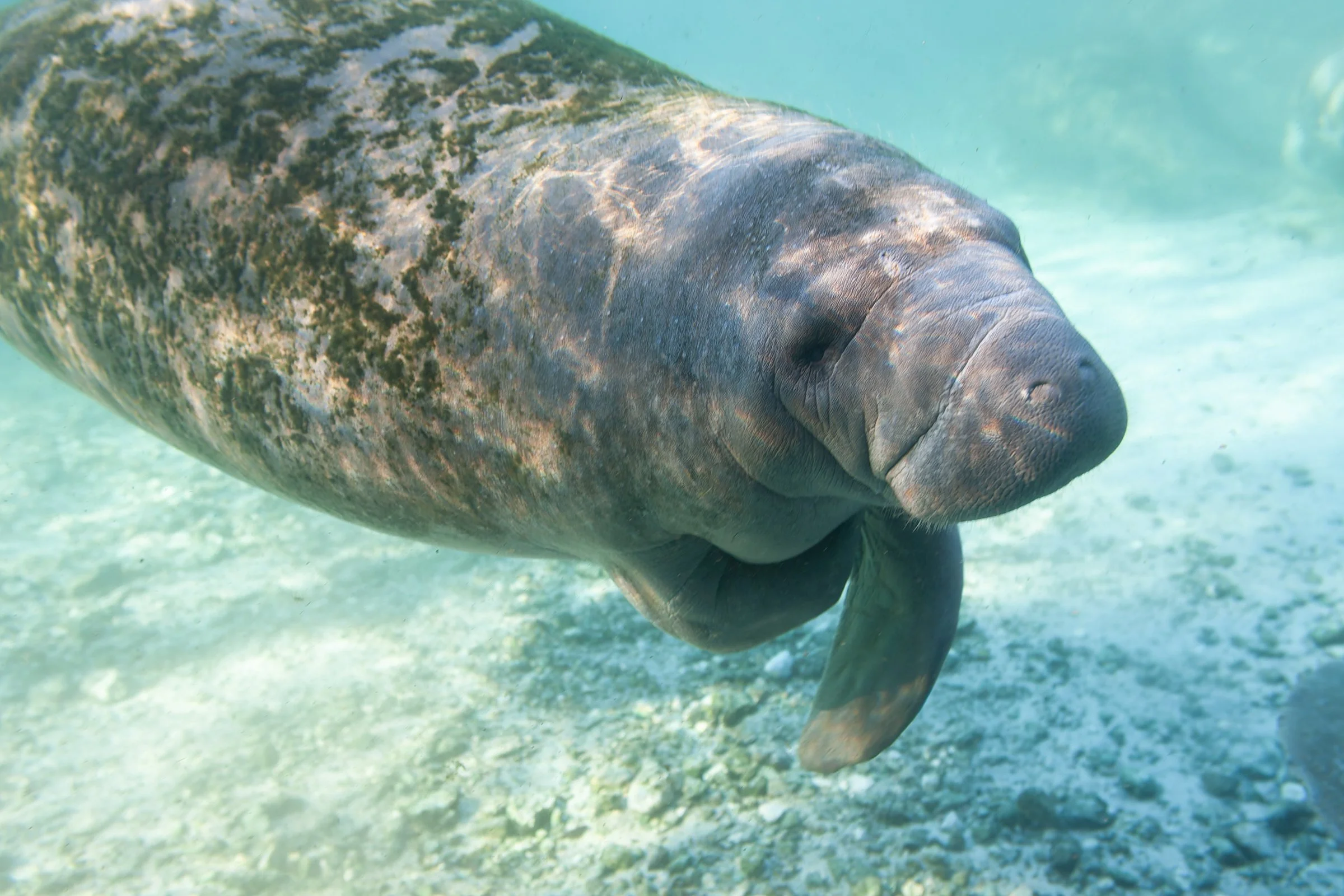
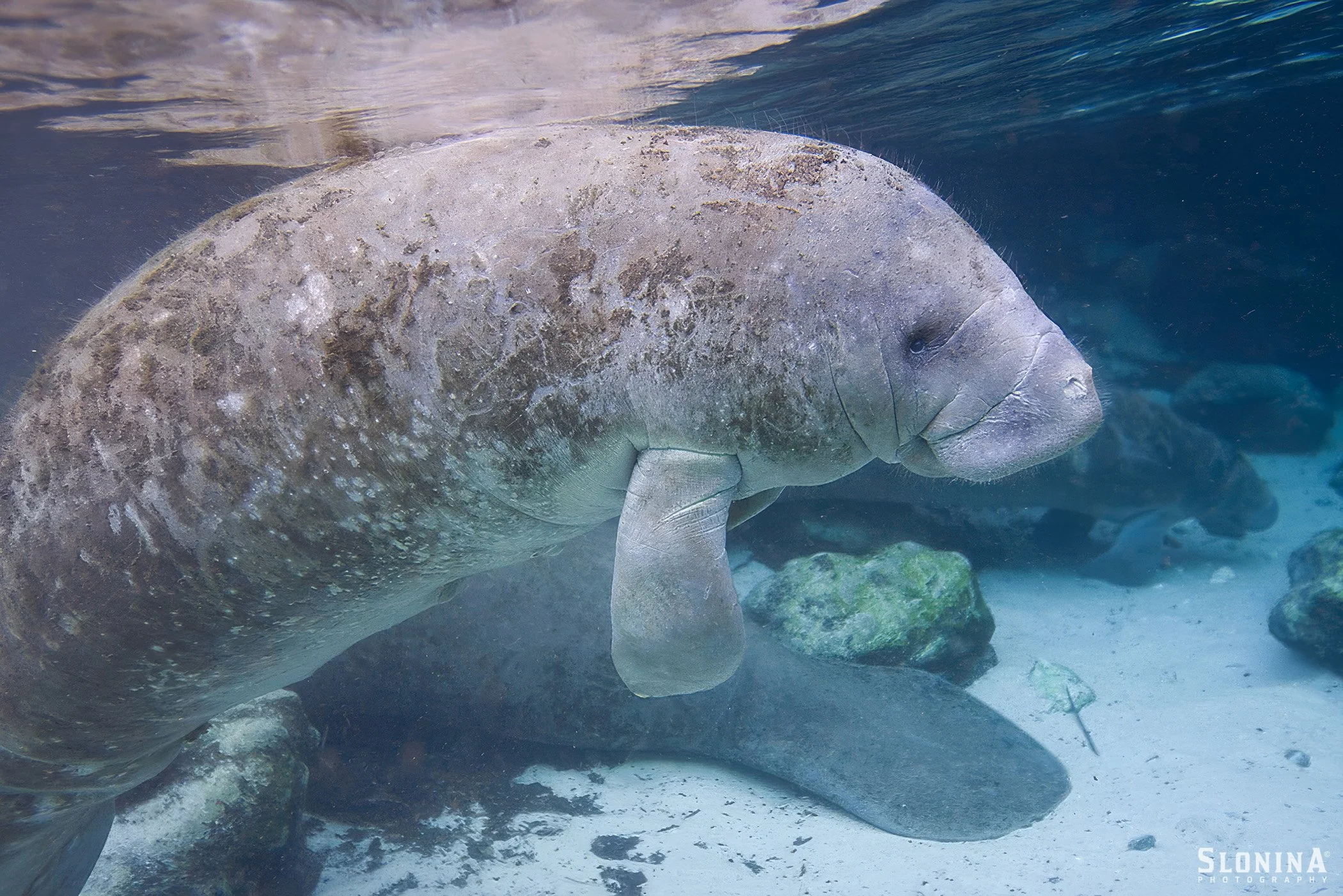
The Florida manatee (Trichechus manatus latirostris) is one of Florida's most recognizable marine mammals. Often called a "sea cow," this large, slow-moving herbivore spends its days grazing on aquatic plants, resting, and traveling through coastal waters, rivers, and freshwater springs. Winter is a particularly interesting time to observe manatees, as they gather in warmer waters to escape falling temperatures.
Nine Facts About Manatees
They can't tolerate cold water.
When water temperatures drop below about 68°F, manatees seek warmer areas, such as natural springs and power-plant discharge canals. Prolonged exposure to cold water can be fatal.
They're surprisingly large.
Adult Florida manatees typically measure 9 to 10 feet long and weigh around 1,000 pounds, although some individuals grow considerably larger.
Their teeth are constantly replaced.
Unlike humans, manatees grow new molars throughout their lives. New teeth develop at the back of the jaw and gradually move forward, replacing worn teeth.
They can hold their breath for 20 minutes.
Although they usually surface every three to five minutes when active, resting manatees can remain underwater for up to 20 minutes.
They eat enormous amounts of vegetation.
Manatees are herbivores that may spend up to eight hours a day feeding, consuming roughly 4 to 9 percent of their body weight in aquatic plants.
They're related to elephants.
Despite their aquatic lifestyle, manatees share an evolutionary ancestor with elephants. Their flexible upper lips even function somewhat like an elephant's trunk when grasping vegetation.
Mothers care for their calves for up to two years.
Manatee calves nurse from their mothers and remain close as they learn feeding areas, migration routes, and important warm-water refuges.
They have only six neck vertebrae.
Most mammals have seven, but manatees have six. Because they cannot turn their heads sideways, they must turn their bodies to look behind them.
They're faster than they look.
Although manatees generally move slowly, they can reach speeds of approximately 15 miles per hour in short bursts.
Conservation Status
Florida manatees are federally listed as Threatened under the Endangered Species Act. Their greatest threats include boat collisions, loss of warm-water habitat, declining seagrass beds, pollution, and fishing-line entanglement. Sadly, it's difficult to find an adult manatee without scars from a boat or propeller. In some areas, studies have found that more than 90% of adults show evidence of at least one watercraft strike. Manatees can survive these injuries, leaving distinctive white or gray scars that researchers use to identify individuals, much like fingerprints. Protecting warm-water habitats, restoring aquatic vegetation, and practicing responsible boating and wildlife viewing are essential to their survival.
Where We See Manatees on Our Tours
During our Florida wildlife photography tours, we visit coastal and wetland habitats where manatees may be encountered. Winter offers opportunities to observe them as they seek warmer water. Sightings depend on local conditions, but watching a manatee surface for air or a mother swimming with her calf can be a memorable experience.
Tips for Spotting and Photographing Manatees
Best times: Winter months, when cooler temperatures bring manatees into warm-water habitats. Calm conditions also make them easier to spot.
Where to look: Warm-water springs, sheltered waterways, canals, and coastal areas with aquatic vegetation. Watch for a snout breaking the surface or circular ripples as a manatee comes up to breathe.
Photography tip: Watch for repeated surfacing patterns and anticipate where a manatee might surface. A fast shutter speed helps capture the brief moment when its nose breaks the surface.
Composition: Look for reflections, smooth water, and opportunities to photograph mothers with calves. Including some of the surrounding habitat can help tell the story, even when only part of the animal is visible.
Respect their space: Use a telephoto lens and photograph from a distance. Never pursue, touch, feed, or disturb manatees, particularly when they're resting in warm-water refuges.