
Photographing From a Boat: What You Need to Know
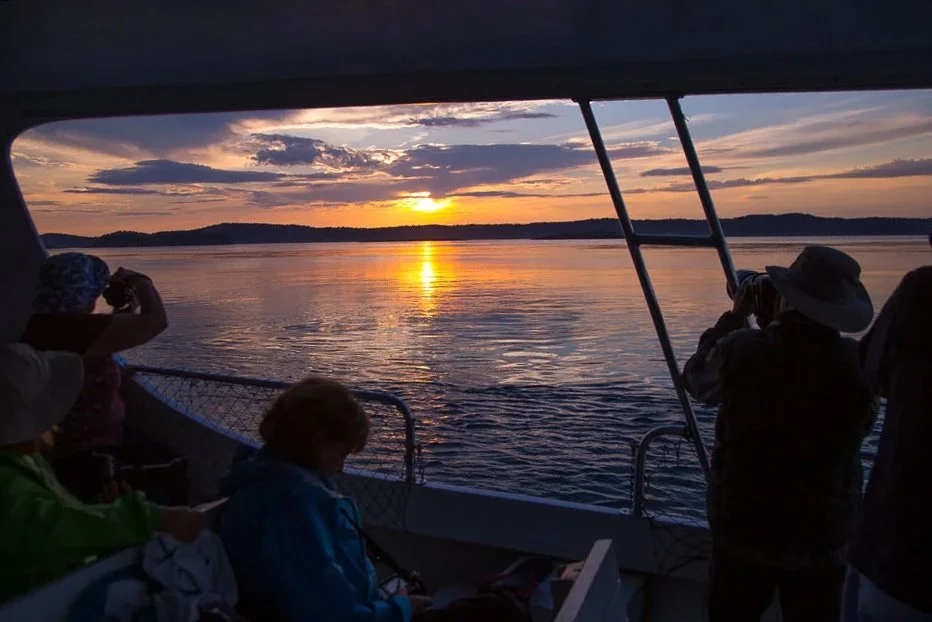
Some of our favorite wildlife and landscape photography opportunities happen from the water during our photo workshops and tours. In Alaska, we spend time photographing whales, puffins, sea otters, bald eagles, glaciers, coastal brown bears, and dramatic landscapes from small boats. In Maine, we photograph puffins, lighthouses, rocky coastlines, seals, whales and seabirds from the ocean as well.
Photographing from a boat is very different from photographing on land. Conditions are constantly changing, the boat is moving, subjects may appear suddenly, and weather can shift quickly. Over the years, we’ve picked up a number of techniques and strategies that help us consistently come back with strong images.




Protect Your Gear
One of the first things photographers notice on the water is how quickly conditions can change. Even on calm days, wind, ocean spray, rain, and waves can become a factor.
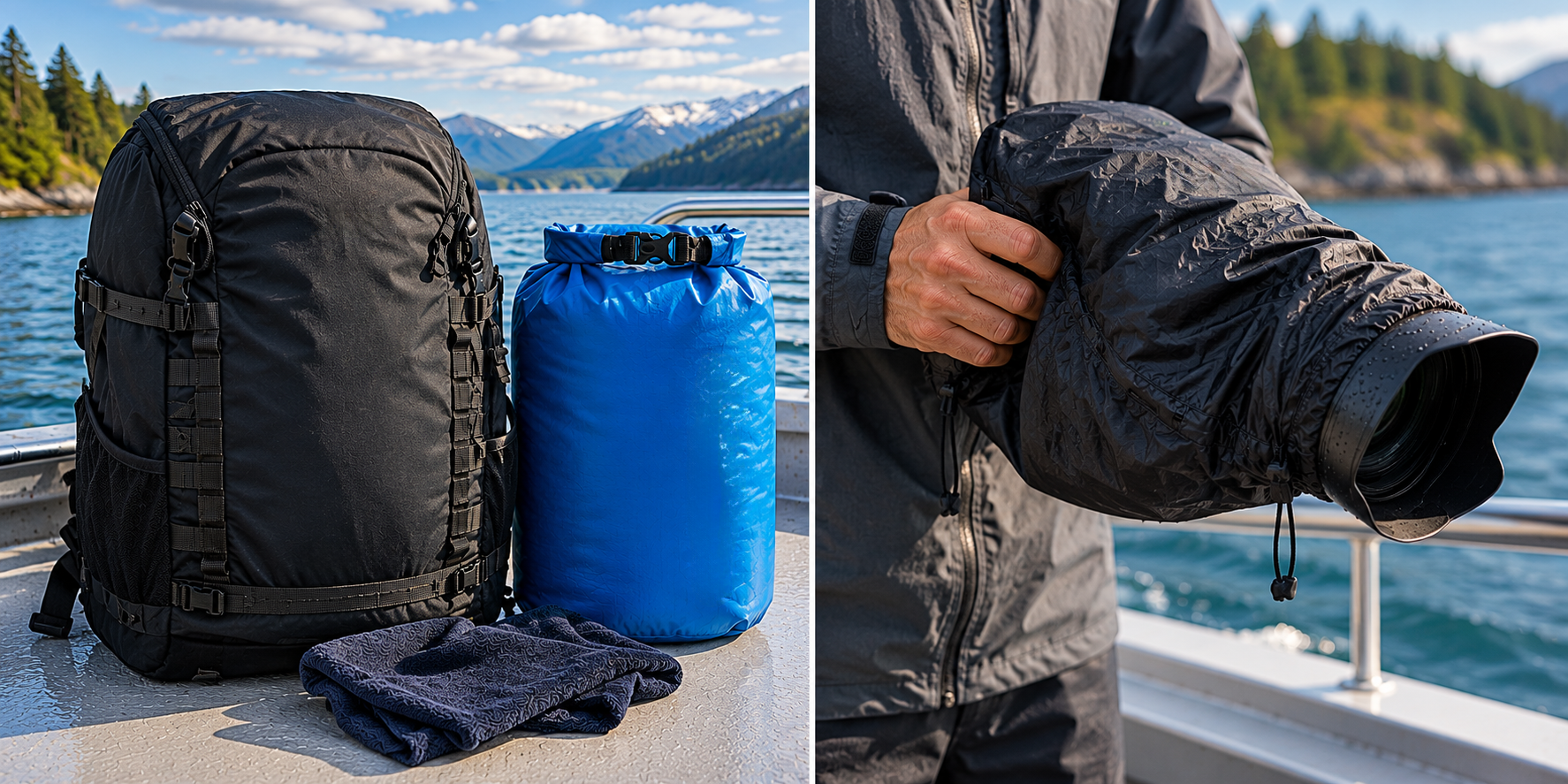
We always recommend bringing rain protection for both yourself and your camera gear. Waterproof jackets, waterproof pants, dry bags, microfiber cloths, and simple rain covers for cameras can make a huge difference. It’s also important to dress warmly since temperatures can feel much cooler out on the water, especially during early mornings, cloudy conditions, or when traveling at higher boat speeds. Waterproof pants are especially helpful because they allow you to sit on wet seats or lean against a damp rail without worrying about getting soaked during the day.
Spray, glare, and wind are constant when photographing from boats. We almost always keep a lens hood on the camera and carry a microfiber cloth in an easy-to-reach pocket. Saltwater can quickly build up on lenses and gear, so it’s best to wipe things down before the salt dries and becomes more difficult to clean. Even on calm days, conditions may not stay calm for long, so we often keep a simple rain cover or towel over the camera between shooting opportunities.
When using dry bags, it’s also a good idea to pad camera gear with towels, sweatshirts, or other soft items to help minimize impact while moving around on the water. We also recommend avoiding lens changes on deck unless absolutely necessary, since spray and moisture can quickly become a problem.
It’s also important to keep extra batteries protected and dry since colder temperatures and wet conditions can drain batteries faster.
Anticipate Behavior, Not Motion
One of the biggest challenges with boat photography is that the boat itself is constantly moving. Instead of reacting to every movement, it often helps to focus on anticipating wildlife behavior.
Whales frequently surface in patterns, seabirds often circle before diving, and sea lions may repeatedly pop up in the same area. Even icebergs can slowly rotate or shift in predictable ways over time. Learning to watch for these patterns helps photographers prepare ahead of the moment instead of reacting after it happens.
Often, the photographers who come home with the strongest images are not necessarily the fastest shooters, but the ones paying close attention to behavior and anticipating what may happen next.
Why Smaller Boats Matter
The type of boat you photograph from can make a major difference in your experience and your images.
Large boats may offer comfort and stability, but they often can’t maneuver as closely around wildlife or position photographers at the best angles. On many of our tours, we intentionally use smaller boats because they allow us to get lower to the water and position ourselves more carefully for photography.
Smaller boats can often approach wildlife more quietly and slowly, which helps create more intimate images while still maintaining respectful distances. This becomes especially important when photographing subjects like sea otters, puffins, or whales, where positioning and angle can completely change the quality of the image.
Leave the Tripod Behind
Tripods generally do not work well on moving boats. Even gentle motion from waves can create vibration and instability.
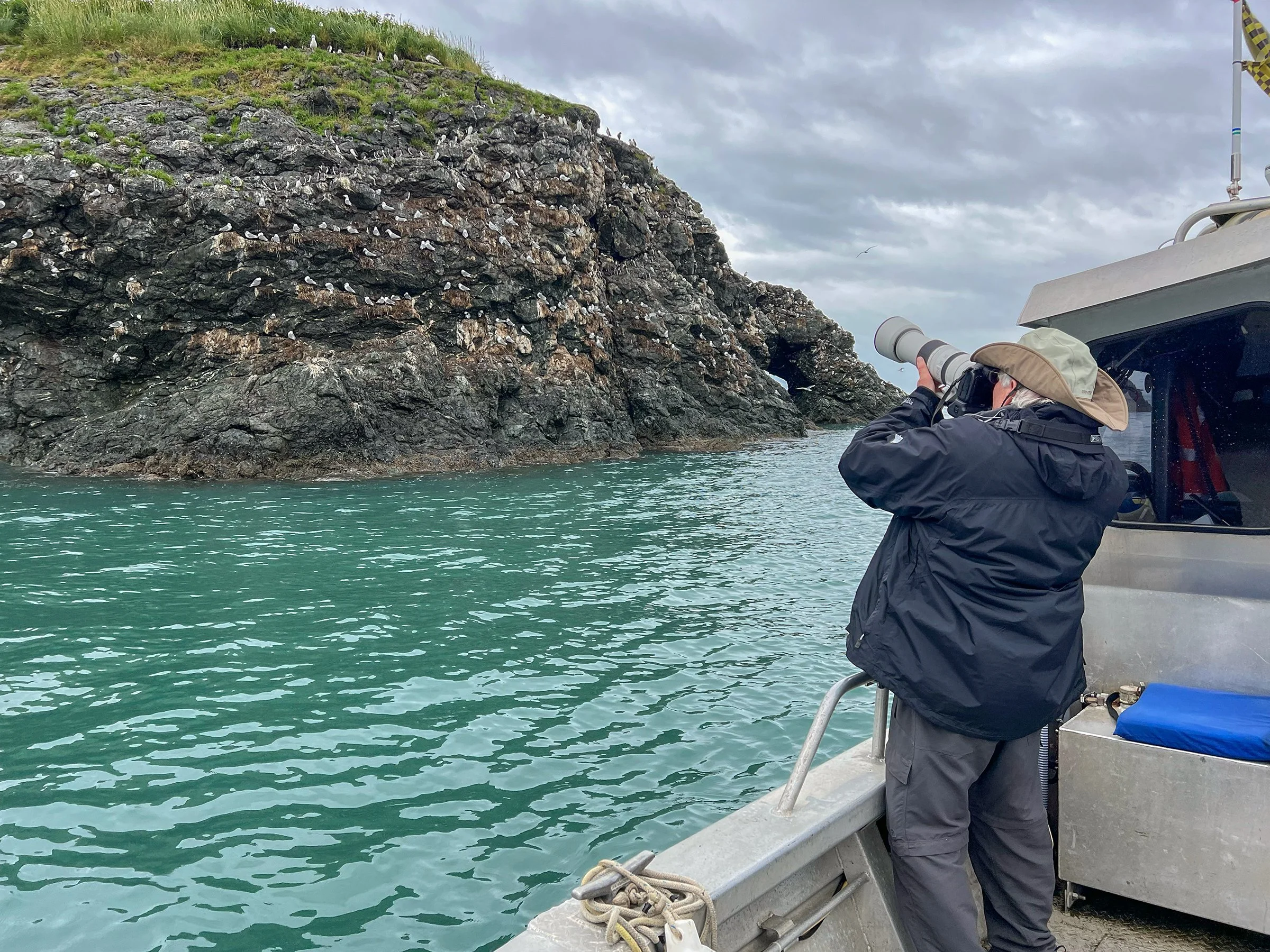
Instead, we recommend handholding your camera and using good shooting technique to stay steady. A few things that help include:
Using faster shutter speeds
Keeping elbows tucked into your body
Standing with a balanced stance
Using image stabilization when available
Shooting short bursts rather than long continuous sequences
Long lenses can still work very well from boats, especially with modern image stabilization systems
Additional Ways to Stay Stable on a Boat
Besides using fast shutter speeds and good handholding techniques, there are a few other things that can help improve stability while photographing from a moving boat.
Keeping your knees slightly bent helps absorb the motion of the boat rather than fighting against it. Many photographers also brace their elbows against their body or lean gently against part of the boat when it’s safe to do so.
A well-adjusted camera strap can also help stabilize your camera. By pulling the strap slightly tight while shooting, you create added tension that reduces movement. Cross-body straps and harness systems can also make it easier to carry heavier lenses comfortably during long days on the water while keeping your camera ready at all times.
Some photographers use systems from companies like BlackRapid and Cotton Carrier, which are designed to help distribute weight and improve comfort when working handheld with larger lenses. These types of systems can be especially helpful when photographing wildlife from small boats for extended periods of time.

Watch Your Horizons
One of the most common mistakes when photographing from a boat is crooked horizons. With constant movement, it’s very easy for horizons to tilt without realizing it. We often recommend occasionally “wasting” a frame or two simply to double-check your horizon and composition before the best action happens. This becomes especially important with ocean scenes, distant mountains, glaciers, and whales surfacing in open water, where even slight tilts can become distracting later.
Experienced Captains Make a Huge Difference
One thing many photographers may not realize is how important an experienced captain can be.
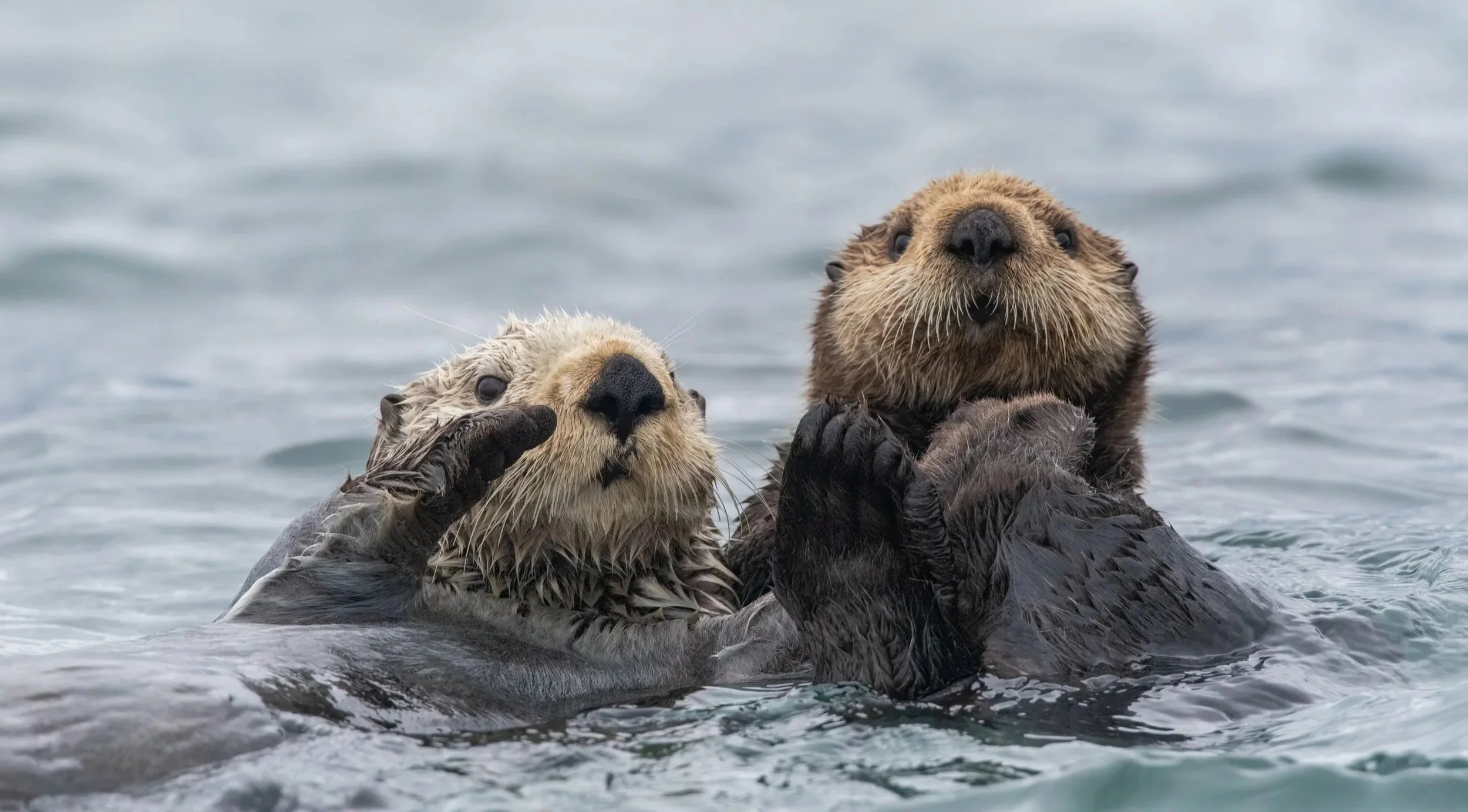
For example, when photographing sea otter colonies, the best captains move in slowly and carefully without rushing the approach. Wildlife should never feel pressured or harassed. Often, the most successful encounters happen when the captain takes a slow, patient approach and allows the animals to remain comfortable.
Over the years, we have carefully hand-picked captains who understand how photographers work and what makes a strong image. It takes years of experience for a captain to learn how to properly position a boat for photography, including lining the boat up with the best angle and light while accounting for weather, waves, and wildlife behavior. Photographers are often some of the toughest clients because we need to be close to our subjects and in the right position at exactly the right moment.
Having the right captain can make a tremendous difference in both the overall experience and the quality of the images you come home with.
Be Ready
One of the biggest lessons in boat photography is that things can happen very quickly. A whale may suddenly breach beside the boat, puffins may fly past unexpectedly, sea otters may pop up right next to you, or bald eagles may swoop overhead with little warning. Having your camera ready, settings prepared, and lens already mounted often makes the difference between capturing the moment and missing it entirely.
Boat photography can sometimes feel unpredictable, but that’s also part of what makes it so exciting. Many of our photo tours and workshops include time photographing from small boats because they can provide incredible opportunities for wildlife and landscape photography that simply aren’t possible from shore.
Two Paths to Wild Beauty.
We are one team of photography experts offering tours through two dedicated websites, ensuring you get the most specialized experience possible.
Explore Alaska Adventures: Your source for exclusive Alaskan photo tours, from private yachts to intimate bear encounters.
Slonina Nature Photography: Your guide to award-winning workshops in North America's most iconic parks, like Yellowstone and the Canadian Rockies.
One team, one mission, two websites to begin your next adventure.