
Photographing Puffins: Maine and Alaska
Puffins are one of the most requested seabirds we photograph on our photo tours and workshops, and for good reason. Their colorful bills, bold patterns, and expressive behavior make them instantly recognizable and highly engaging to capture.
We time our tours around peak puffin season to give you the best photographic opportunities. In Maine, that means June, when Atlantic Puffins are actively nesting and moving back and forth between the water and their burrows. In Alaska, we photograph Horned and Tufted Puffins in July and August, when birds are spread along the coastline and actively feeding.
What many people don’t realize is that there are three species you can photograph across North America, and each offers a slightly different experience depending on where and when you go.
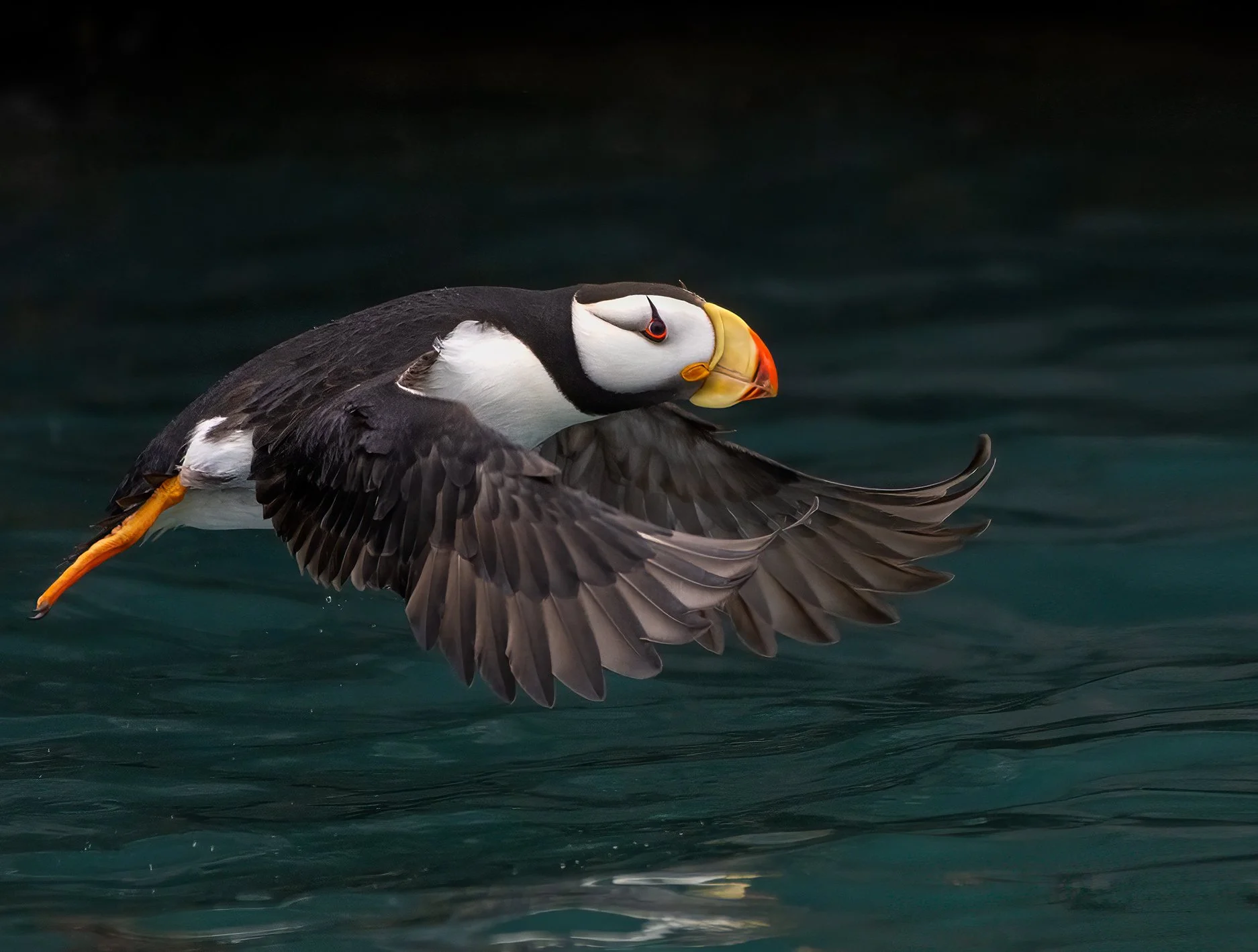
Horned Puffin taking off in Alaska waters.
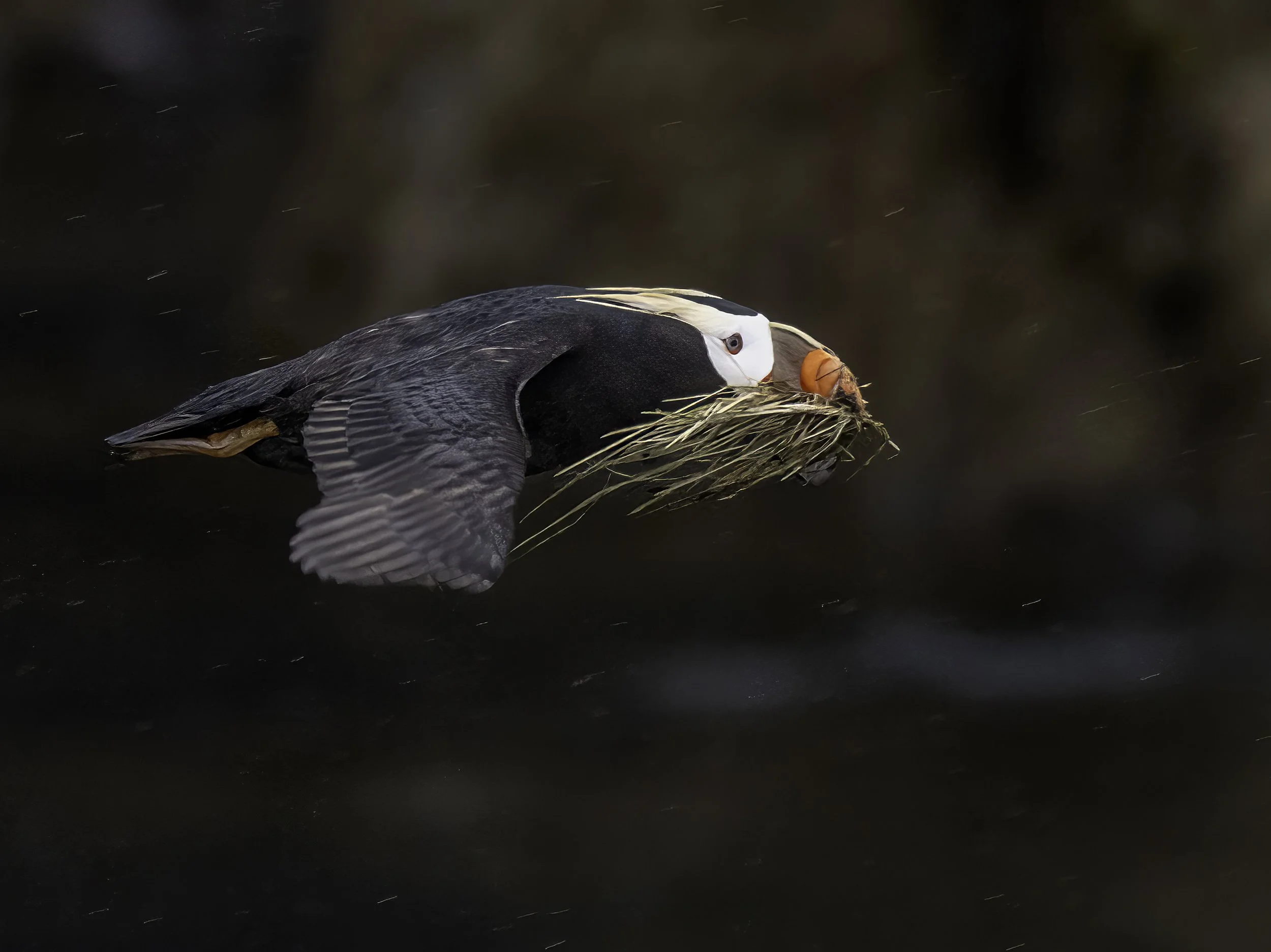
Tufted Puffin carrying nesting material in Alaska. Photo credit: Jenny Bowlden.

Atlantic Puffins posing in Maine.

Pair bonding at the colony. Atlantic Puffins, Maine.
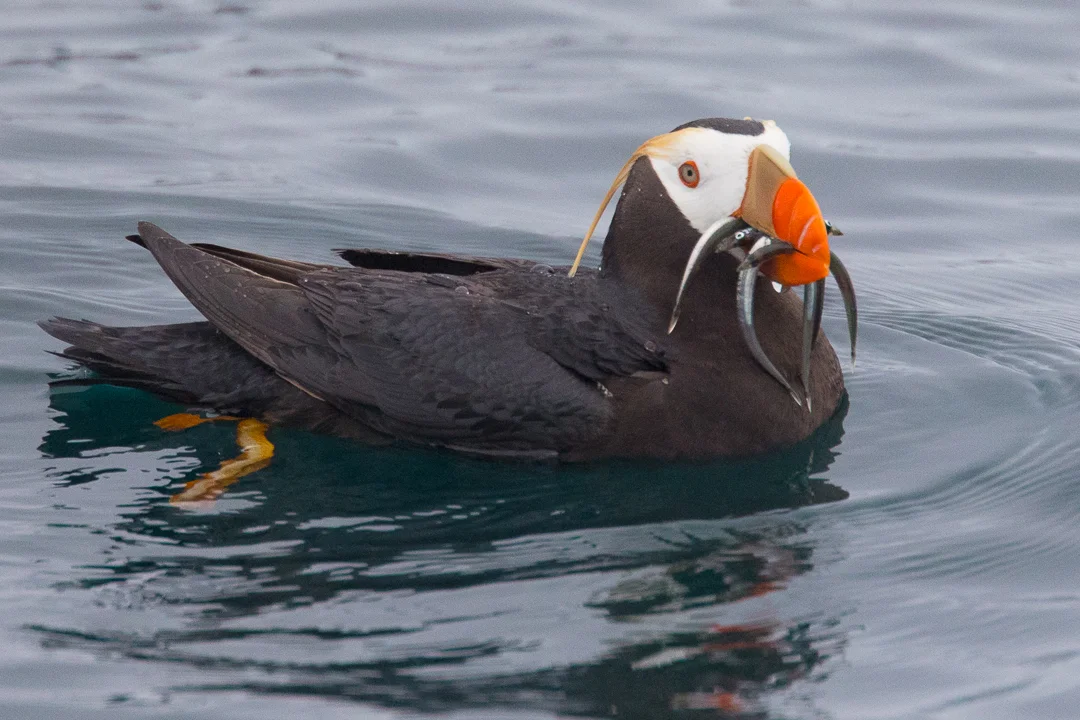
Tufted Puffin carrying sand lance in Alaska.
Horned and Tufted Puffins in Alaska
During our July and August Alaska tours, we encounter both Tufted Puffins and Horned Puffins along the rugged coastline.
At first glance, they can look similar, but each species has distinct features. Horned Puffins are smaller, with a white face, a more compact bill, and a small horn-like projection above the eye. Tufted Puffins have a darker body with long pale head plumes and a bold orange bill.
In Alaska, birds are spread out along cliffs and open water, and conditions can change quickly. This creates opportunities for more varied backgrounds and flight images, but also requires more anticipation and flexibility.
Atlantic Puffins in Maine
On our June Maine Puffins tour, we photograph Atlantic Puffins along the rocky islands of the North Atlantic. Access is carefully managed, and we work from designated blinds positioned near nesting colonies.
This setup allows for eye-level perspectives and clean backgrounds as puffins move between the water and their burrows. It also creates consistent opportunities to photograph behavior, including birds carrying fish, interacting at nesting sites, and landing near the colony.
The predictability of the colony, combined with controlled access, makes this one of the best places to focus on composition and behavior.
Timing Matters
Timing plays a major role in how puffins look and behave.
During the breeding season, puffins develop their bright, multi-colored bills. This is the look most people associate with them. After nesting, they shed the outer plates of their bills, revealing a much duller appearance.
If you want that classic vibrant color, late spring through mid-summer is the ideal window. Outside of that period, the same birds can look surprisingly different.
Behavior and Feeding
Puffins spend much of their time at sea, returning to land during the breeding season to nest in burrows along coastal islands and cliffs. They are excellent swimmers and use their wings to “fly” underwater while hunting small fish.
One of the most recognizable behaviors is when puffins return to the colony carrying multiple fish crosswise in their bills. Specialized spines on their tongue allow them to hold several fish at once while continuing to hunt. These moments create some of the most iconic images, especially as the birds approach the colony.
Puffins are also highly routine during nesting season. They often follow consistent flight paths between the water and their burrows, which makes it easier to anticipate where to position yourself. Spending a few minutes observing these patterns can make a big difference in capturing clean flight shots or interactions near the nesting area.
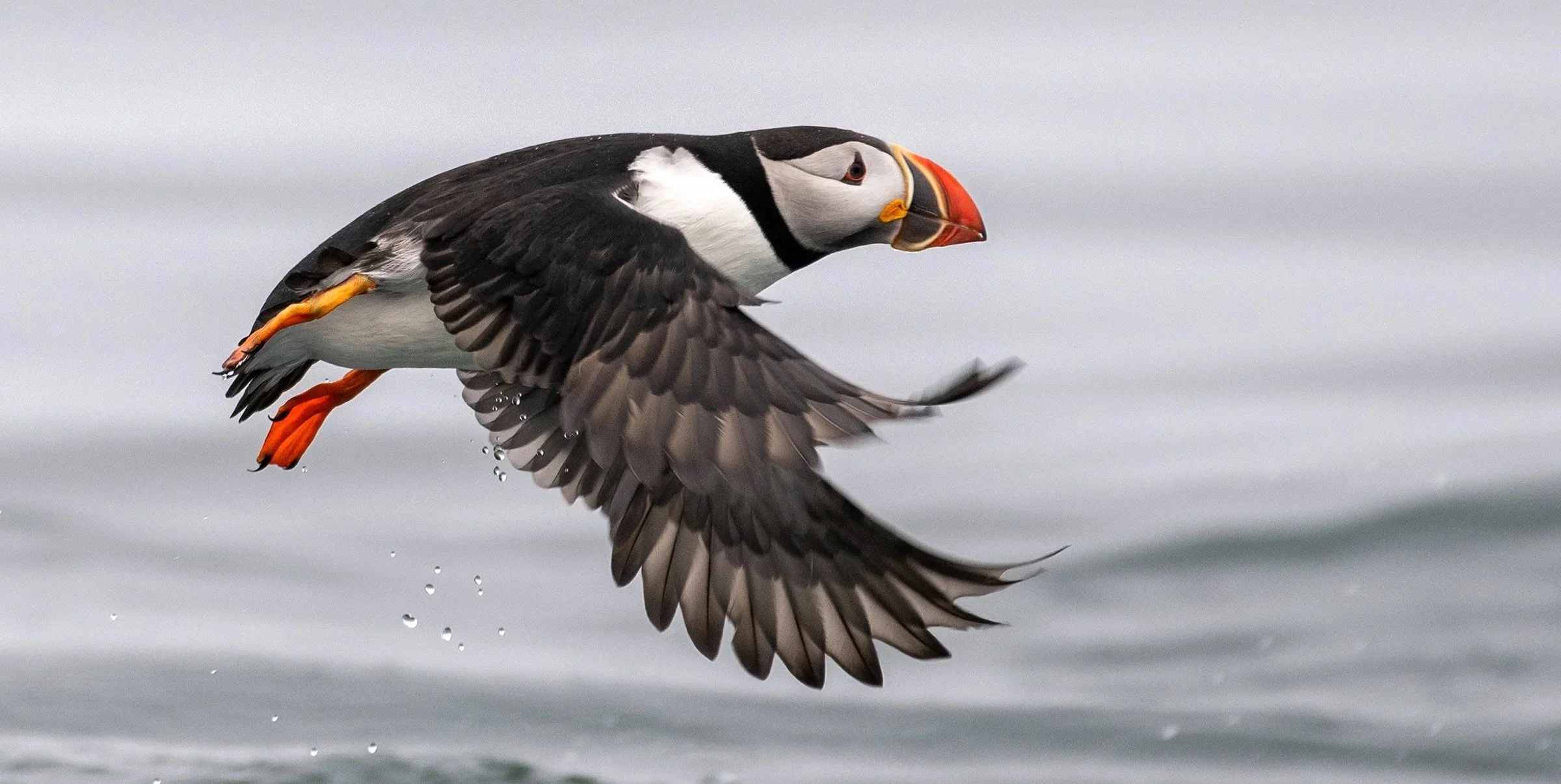
Atlantic Puffin. Photo credit: Jenny Bowlden
Photographing Puffins in Flight
Puffins may be small, but they move quickly. They fly low over the water and approach colonies at speed, often giving you only a short window to react.
Preparation is key. A fast shutter speed helps freeze motion, and continuous autofocus is essential for tracking. It also helps to pick up the bird early and follow its path rather than trying to acquire focus at the last second.
Because their flight paths are often consistent near colonies, spending time observing patterns can make a big difference in your success rate.

Photographing puffins from a blind on our Maine Puffins workshop.
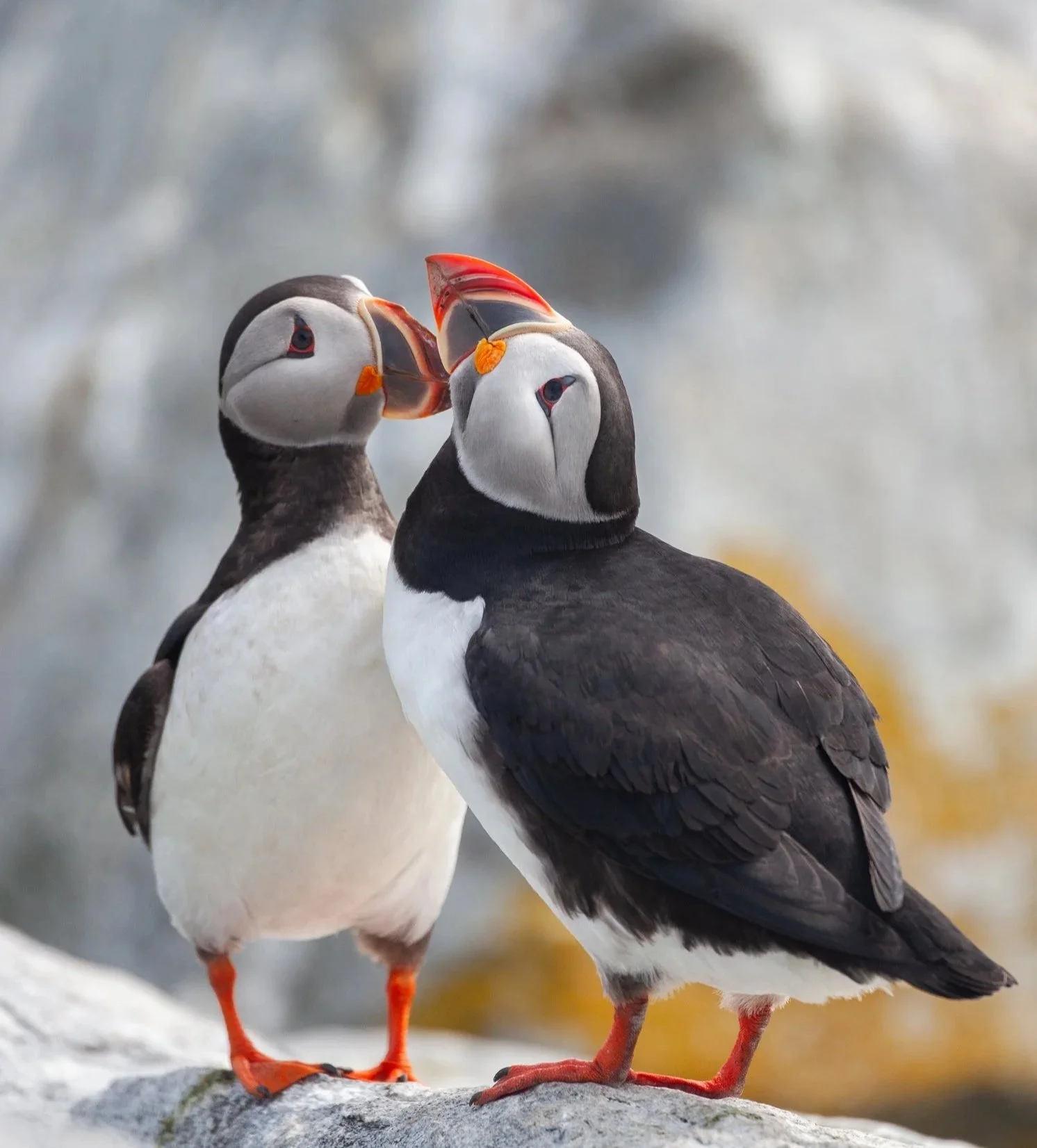
Atlantic Puffins, Maine.
Where to Focus Your Attention
When you first arrive at a puffin colony, it’s easy to feel overwhelmed by the activity. Instead of trying to photograph everything, it helps to slow down and focus on one type of behavior at a time.
Watch where birds are consistently landing, where they pause, and how they move between the water and their burrows. Position yourself based on that movement rather than reacting to it. Clean backgrounds, good light, and predictable flight paths often come down to small adjustments in where you stand.
Taking a few minutes to observe before you start shooting can make a big difference in the quality of your images.
Understanding Behavior Leads to Better Images
Whether you are photographing puffins in Maine or Alaska, understanding their behavior is what leads to stronger images.
Watching how they approach the colony, where they tend to land, and how they interact with each other allows you to anticipate moments rather than react to them. Over time, this leads to more consistent results and more meaningful photographs.
Across both coasts, the goal is the same. Give the birds space, observe their patterns, and be ready when the moment comes together.
Puffins offer one of the most enjoyable and rewarding wildlife photography experiences out there. With the right timing, a bit of preparation, and an understanding of their behavior, you can come away with a wide range of images that capture both their character and their environment.
Photographing Responsibly
Puffins are sensitive during nesting season, and it’s important to give them space and follow local guidelines. Working from designated areas and avoiding disturbance helps ensure they continue to return to these colonies year after year.
Respectful photography not only protects the birds but also leads to more natural behavior and stronger images.
Join Us
If photographing puffins is something you’d like to experience in person, we cover both coasts on our photo tours and workshops, from the Atlantic Puffins of Maine to the Tufted and Horned Puffins of Alaska. Our Alaska trips offer the chance to photograph puffins along remote coastlines alongside whales, sea otters, and other marine wildlife. Contact us to learn more.
Two Paths to Wild Beauty.
We are one team of photography experts offering tours through two dedicated websites, ensuring you get the most specialized experience possible.
Explore Alaska Adventures: Your source for exclusive Alaskan photo tours, from private yachts to intimate bear encounters.
Slonina Nature Photography: Your guide to award-winning workshops in North America's most iconic parks, like Yellowstone and the Canadian Rockies.
One team, one mission, two websites to begin your next adventure.