Snowy Owl Fun Facts and Photography Tips
Snowy owls (Bubo scandiacus) are among the most striking birds in the world. With their bright white plumage, piercing yellow eyes, and calm, watchful presence, they feel almost otherworldly. Seeing one perched quietly on an open landscape or flying low across a winter field is an experience photographers never forget, and one that continues to draw people back out into the cold on our photo tours and workshops.
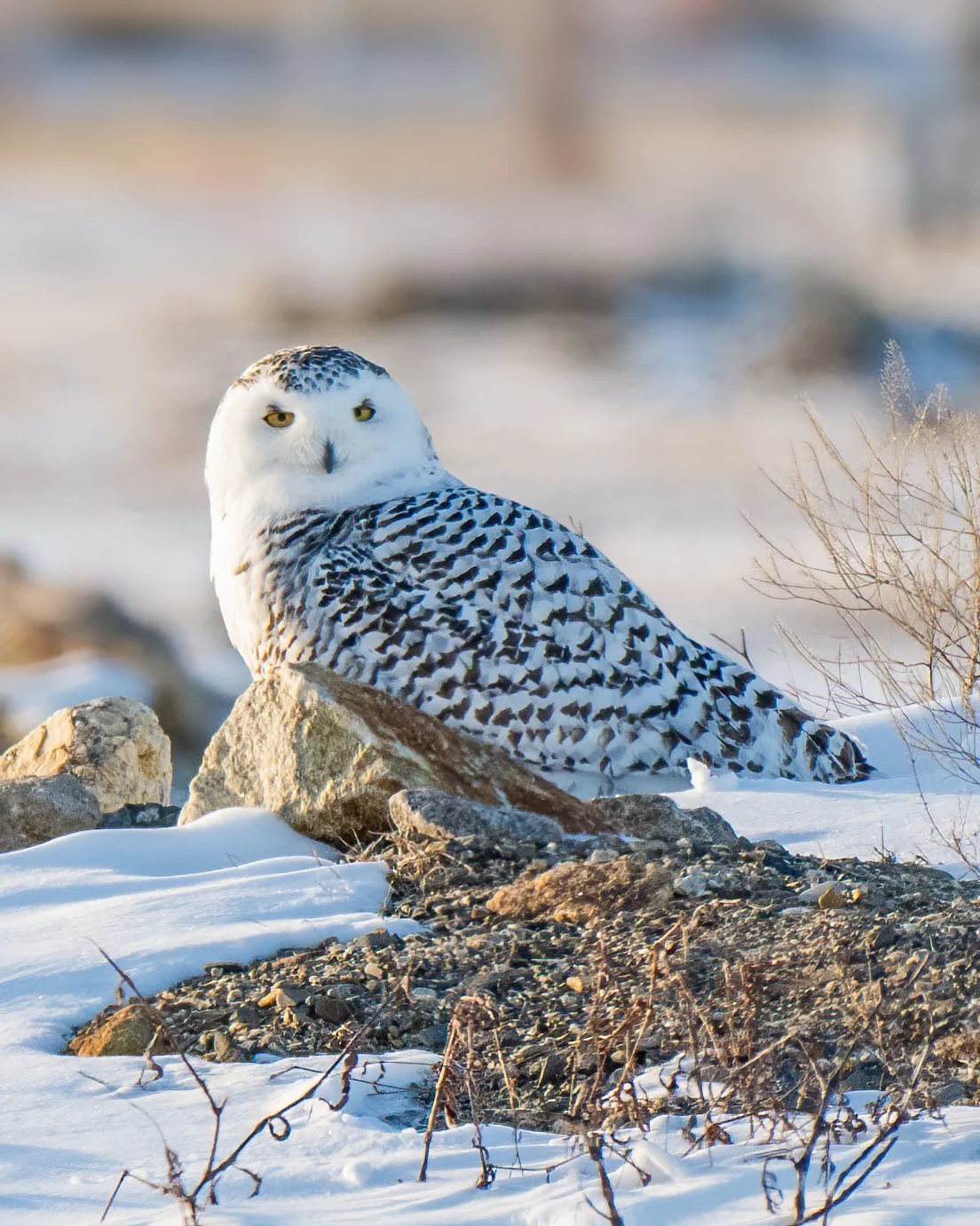
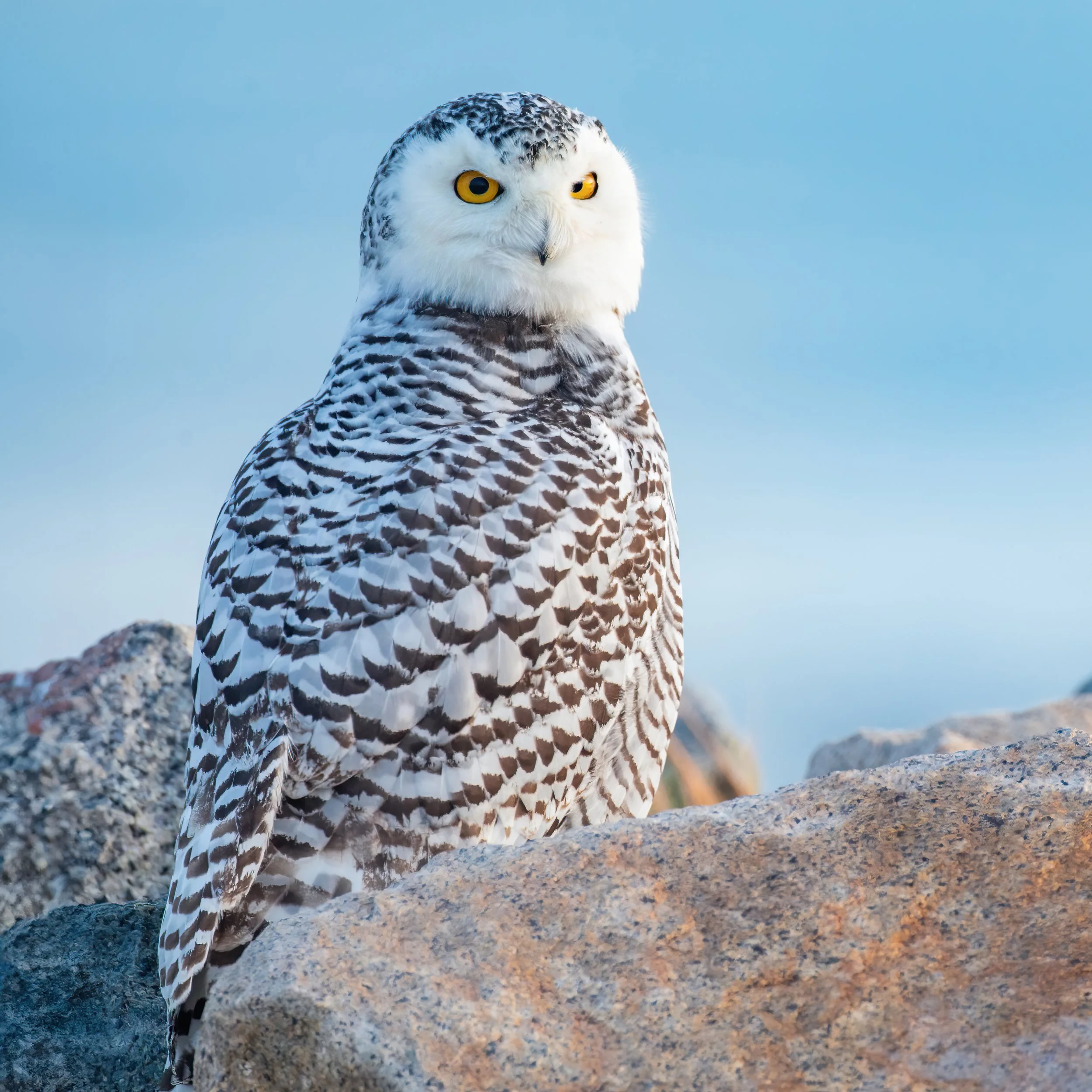
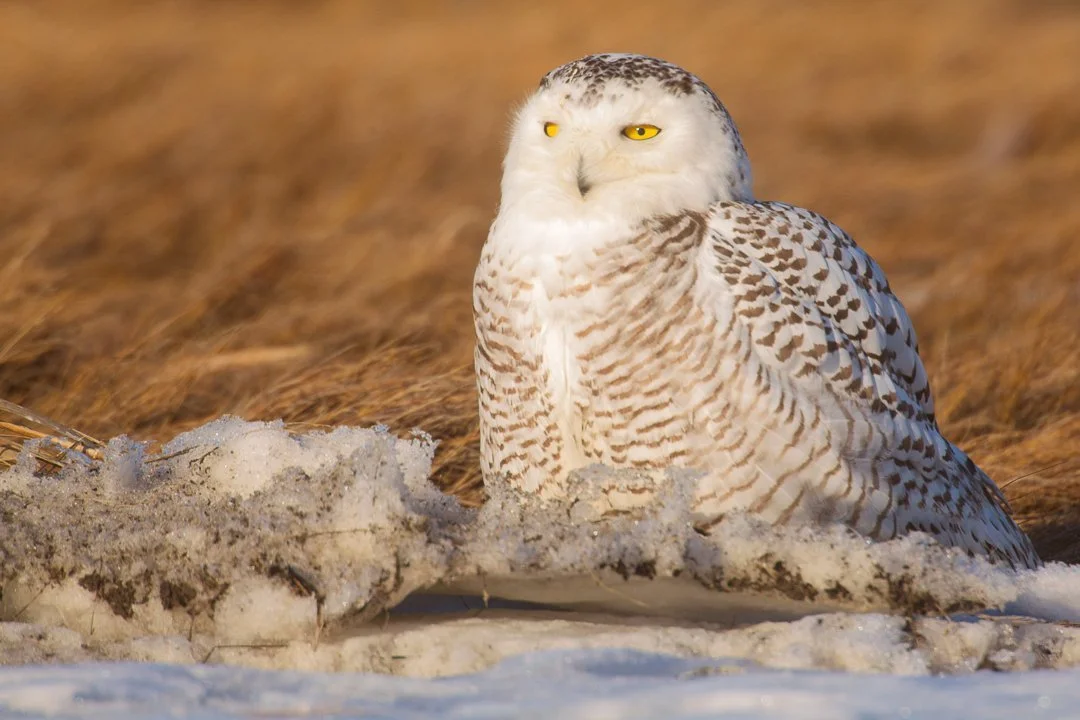
Perched quietly, its white plumage standing out against the landscape.
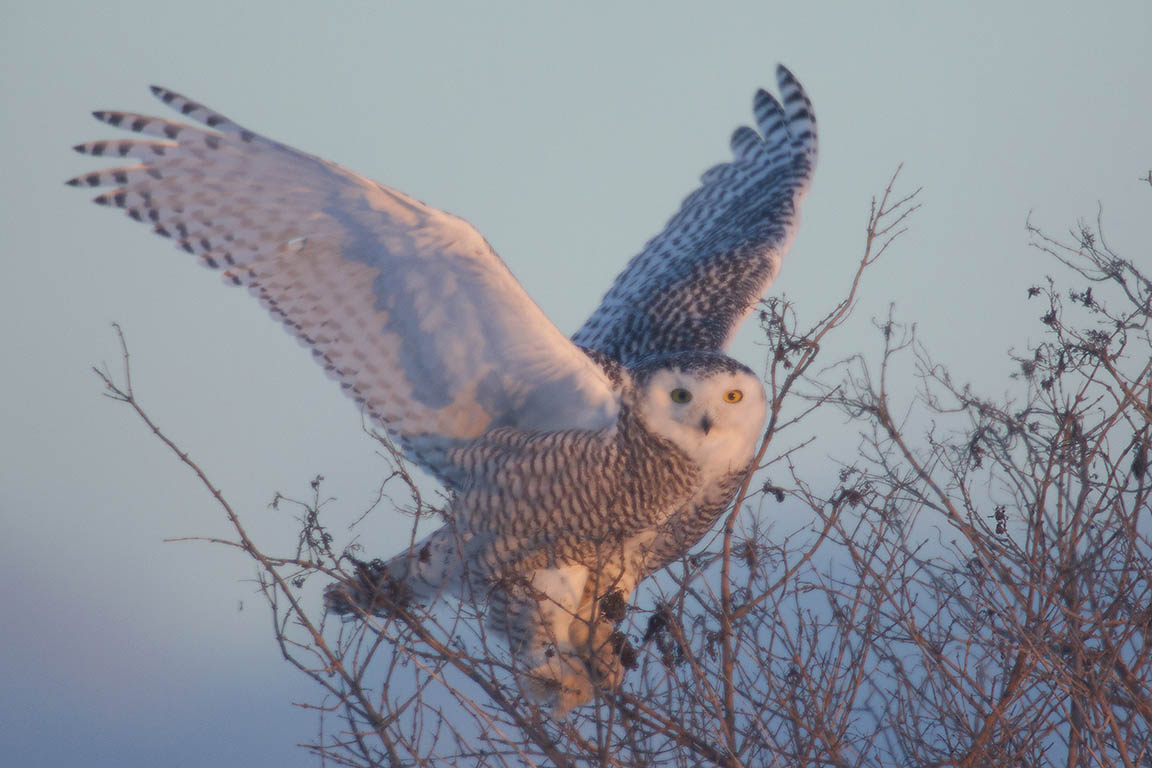
Stretching its wings in the branches, revealing a broad wingspan and subtle markings.
Nine Facts About Snowy Owls
They are birds of the Arctic tundra. Snowy owls breed in the far north, nesting directly on the ground in open tundra landscapes.
They are the heaviest owl in North America. Snowy owls outweigh all other North American owl species, with large females especially heavy, an adaptation that helps them survive extreme Arctic conditions.
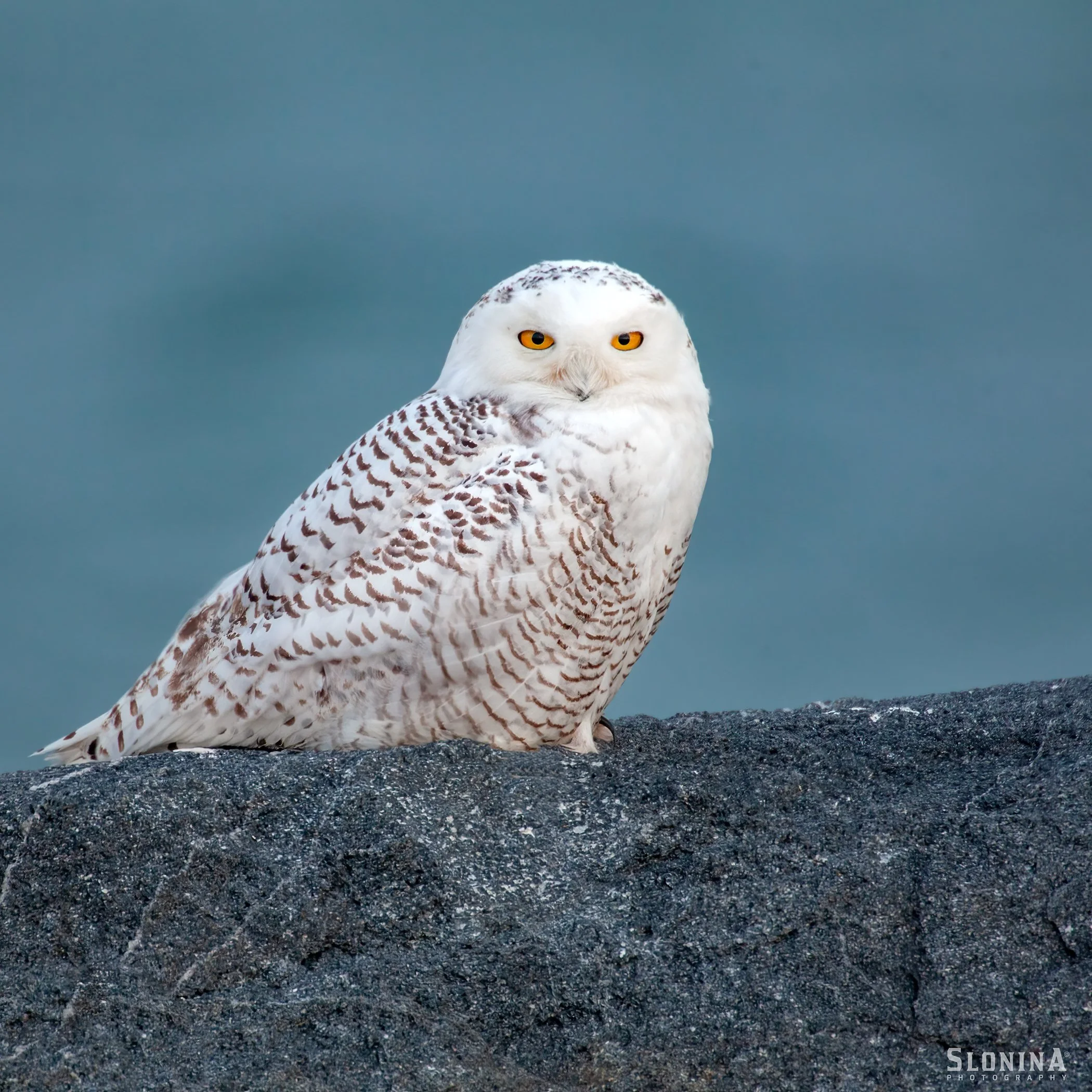
Males are whiter than females. Adult males are often nearly pure white, while females and young birds have heavier dark barring.
They are active during the day. Unlike most owls, snowy owls hunt both day and night, especially during the Arctic summer.
Their movements depend on food availability. In years when lemmings are scarce, snowy owls may move far south in what is known as an irruption.
They prefer wide open spaces. Snowy owls favor treeless areas that resemble tundra, such as open fields, coastlines, and shorelines.
They sit low and stay still. Snowy owls often perch on the ground, fence posts, or low mounds, relying on camouflage and patience.
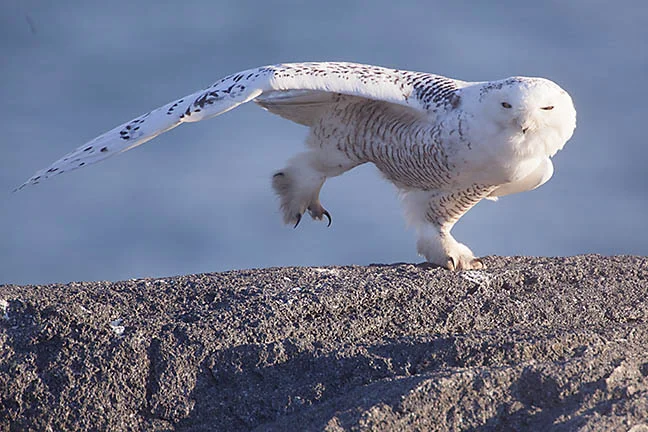
Their flight is strong and direct. When airborne, snowy owls fly low with steady wingbeats, making them exciting subjects to photograph in motion.
They are icons of winter wildlife. Snowy owls have become symbols of northern wilderness and winter landscapes across North America.
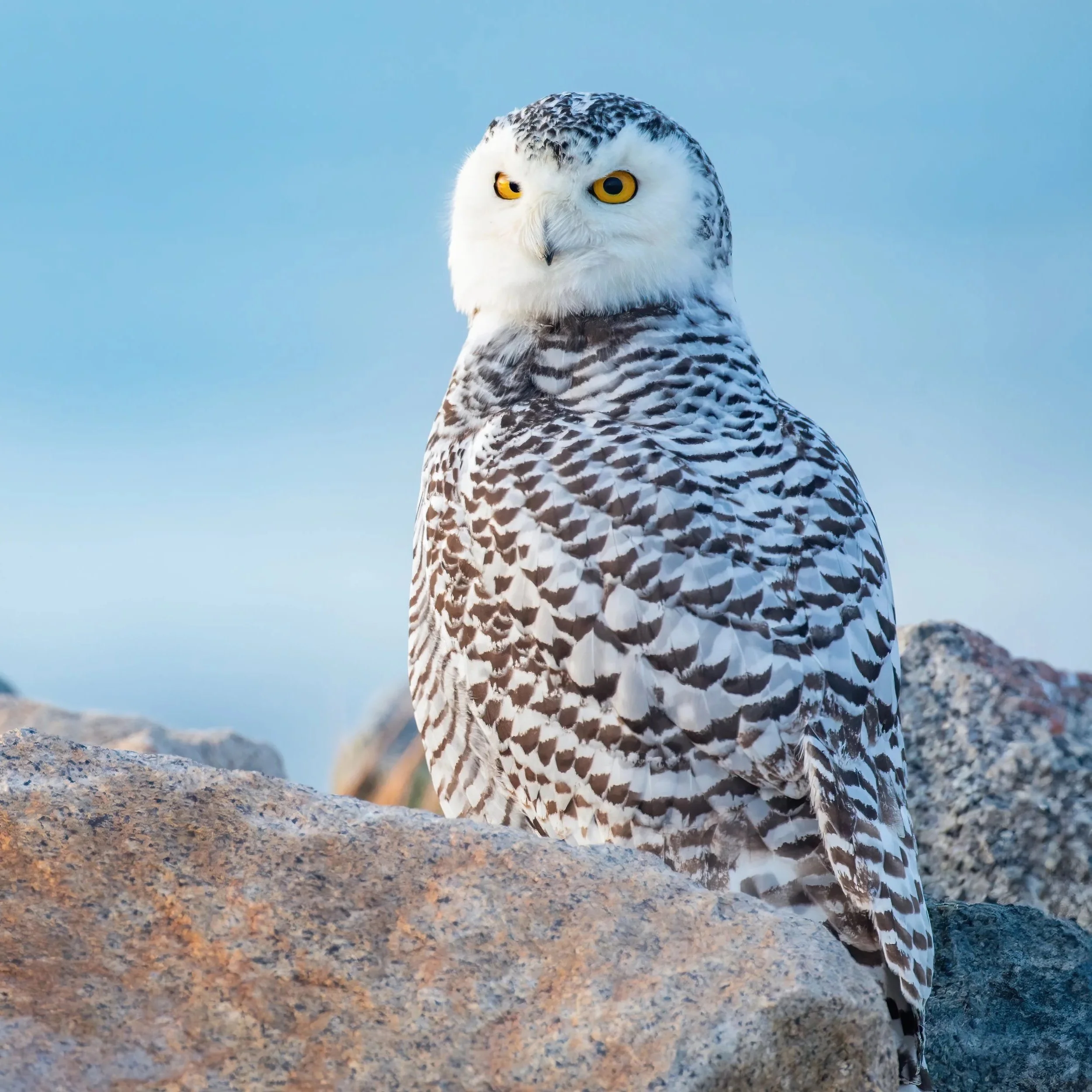
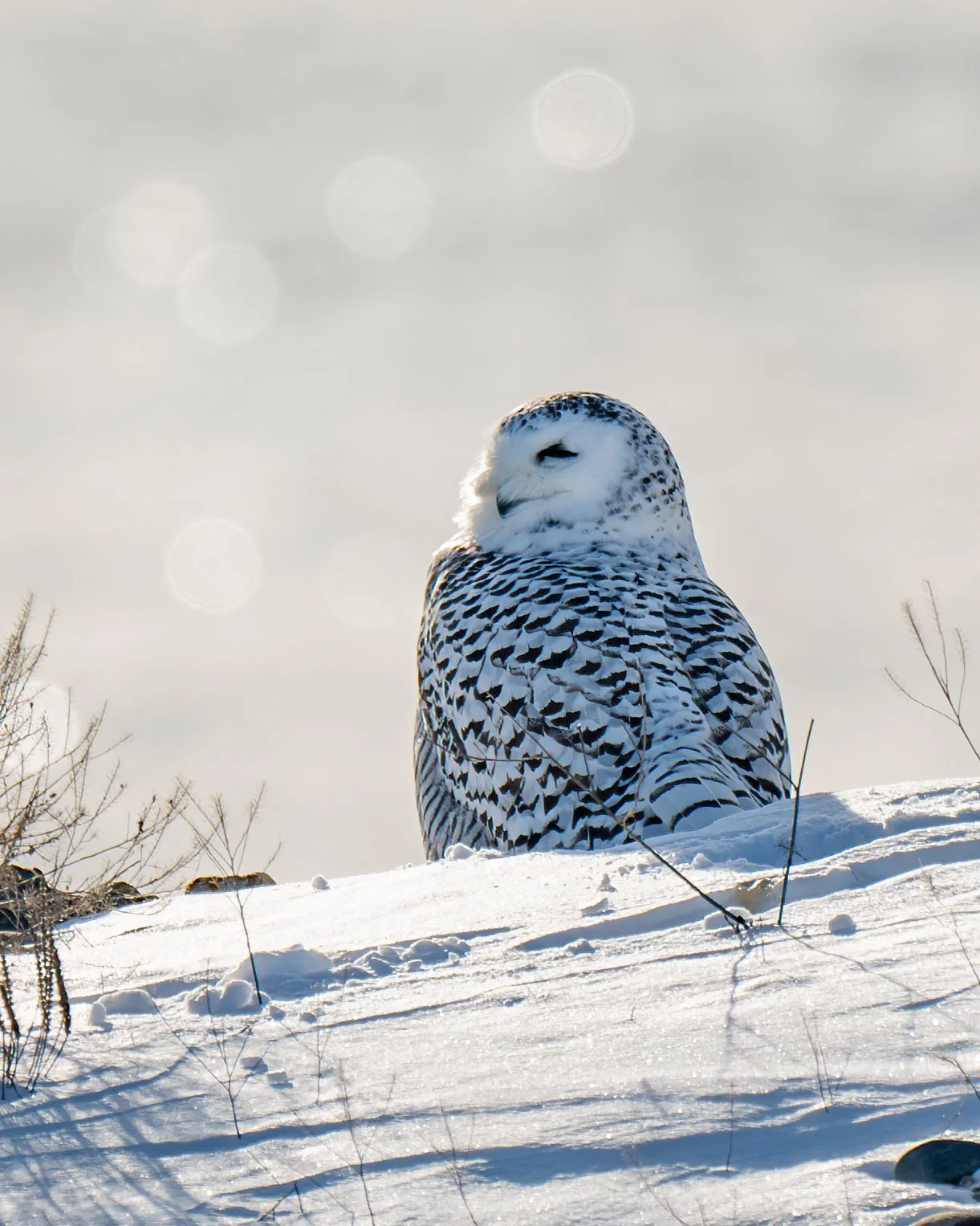
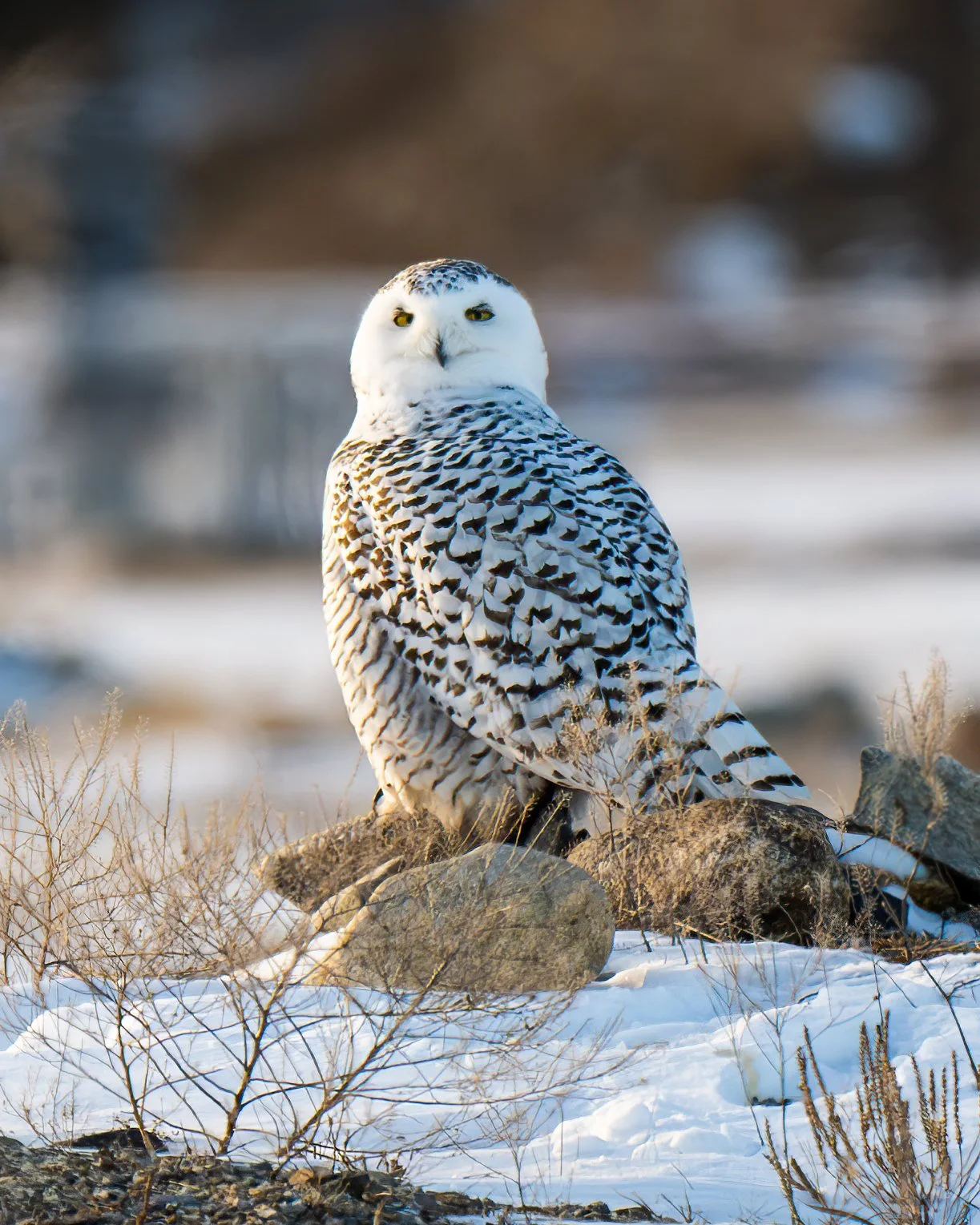
Standing quietly against the winter landscape, alert and unbothered by the cold.
Where We See Snowy Owls on Our Tours
We photograph snowy owls during winter on select photo tours and workshops in New England, focusing on open landscapes where they are known to hunt and rest. These include coastal areas, agricultural fields, grasslands, and shorelines that mimic their Arctic habitat. Snowy owls are often seen perched on low rises, dunes, fence posts, or the ground, offering clean sightlines and excellent photographic opportunities when conditions are right. Because their movements vary from year to year, snowy owl encounters require flexibility, local knowledge, and careful timing.
Tips for Spotting and Photographing Snowy Owls
Best times: Morning and late afternoon, when light is softer, and owls are more active.
Where to look: Wide open areas with minimal trees, including fields, shorelines, dunes, and coastal flats.
Photography tip: Use a long lens and maintain a respectful distance. Snowy owls are sensitive to disturbance and often remain still when undisturbed.
Composition: Look for simple backgrounds like snow, sky, or water to highlight their white plumage. Including subtle landscape elements can help tell the winter story.
Behavior cues: Head swivels, raised posture, or repeated scanning often signal an upcoming flight.
Conservation Status
Snowy owls are currently listed as Vulnerable globally due to climate change and shifts in Arctic ecosystems. Changes in snow cover and prey availability are impacting breeding success in the far north. Responsible wildlife viewing, habitat protection, and continued monitoring are important for their long-term survival.
Snowy owls are currently listed as Vulnerable globally due to climate change and shifts in Arctic ecosystems. Changes in snow cover and prey availability are impacting breeding success in the far north. Responsible wildlife viewing, habitat protection, and continued monitoring are important for their long-term survival.