Winter Wildlife of Yellowstone: How They Survive the Snow
Yellowstone in winter is a world of extremes. The park’s geothermal basins steam through frigid air, snow blankets the valleys, and temperatures often dip below zero. During our photo tours and workshops, we explore this frozen wilderness in search of the animals that define it. Red foxes, bison, moose, elk, wolves, bighorn sheep, coyotes, and river otters each have their own strategies for surviving and even flourishing in Yellowstone’s coldest season.

Survival plays out in the snow as coyotes fight for their share.
Bison: Built for the Blizzard
Bison are true symbols of endurance. Their dense undercoat, protected by long guard hairs, provides insulation strong enough to shed snow before it melts. They use their massive heads as plows, swinging them side to side to uncover buried grasses. Despite temperatures that would freeze most animals, bison maintain their body heat through sheer bulk and metabolic efficiency. Watching a bison herd move through a whiteout is a reminder of how deeply adapted they are to this landscape.
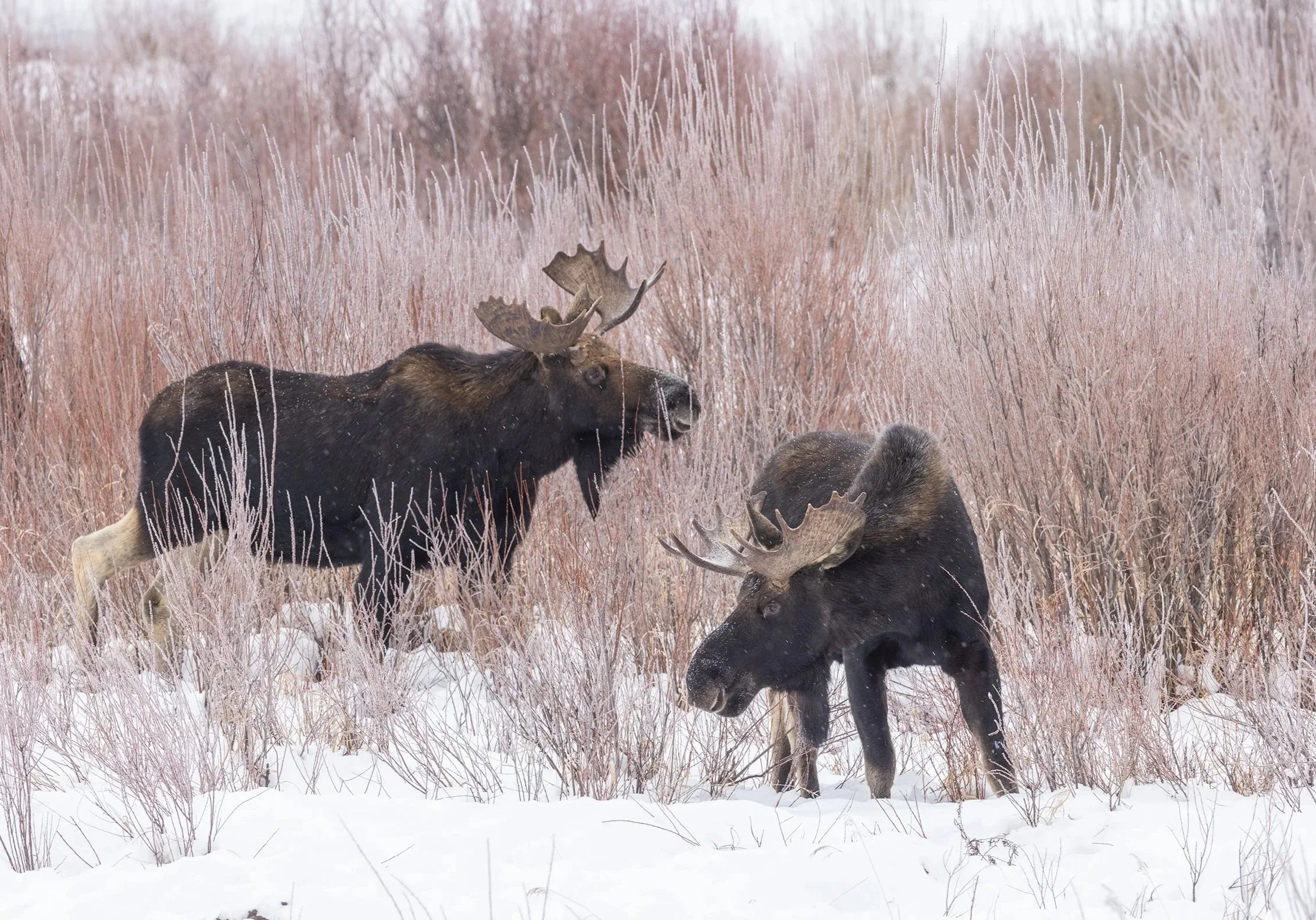
Moose: Surviving on Sparse Browsing
Moose are well-suited to Yellowstone’s cold forests and river valleys. Their long legs allow them to wade through deep snow and reach willows buried under it. In winter, their diet shifts almost entirely to woody browse such as willow, aspen, and dogwood. A thick layer of insulating fur and their large bodies help conserve heat, though the season is demanding. Moose often stick close to rivers or thermal areas where snow is shallower and vegetation more accessible.
Elk: A Test of Endurance
Elk are among the most visible animals in Yellowstone during winter. As snow deepens, many move from higher elevations to lower valleys and thermal areas where grasses remain exposed. They form large herds that provide extra eyes and ears for detecting danger, especially from wolves. Using their hooves, elk dig through snow to reach buried grasses and sedges, and when food is scarce, they browse on shrubs and tree bark. Their four-chambered stomach allows them to digest tough, fibrous plants, and they rely on fat reserves built up in fall to get through the leanest months. The balance between elk and wolves is one of Yellowstone’s most studied predator-prey relationships, a powerful example of nature’s constant push and pull.
Wolves: Thriving in the Cold
Wolves are built for the challenges of winter. Their thick coats, strong legs, and endurance make them well-equipped to travel across frozen terrain in search of food. Snow gives them an advantage over ungulates like elk, whose movement becomes labored in deep drifts. Winter is often a season of plenty for wolves since weakened prey are easier to catch. The park’s wolf packs are highly social, working together to hunt and defend territory. Their howls echoing across the snowy valleys are one of Yellowstone’s defining winter sounds.
The Red Fox: A Master of the Hunt
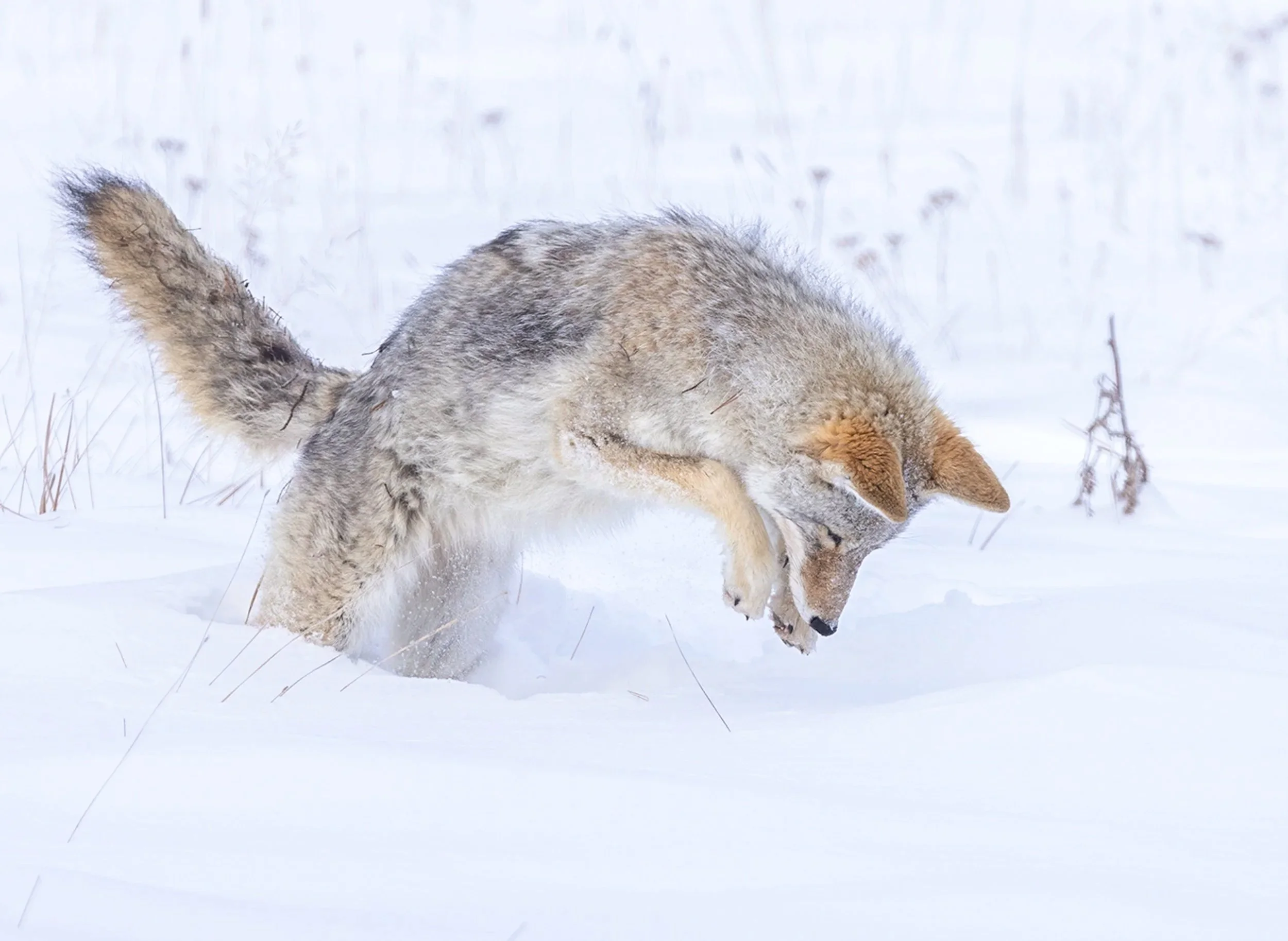
The red fox is one of Yellowstone’s most captivating winter mammals. Their thick winter coats turn full, with fur-covered paws that act like snowshoes. In deep snow, foxes rely on their keen hearing to detect the faint movements of mice and voles beneath the surface. Once they lock in on the sound, they leap high and dive headfirst into the snow, sometimes disappearing completely before emerging with a meal. This “mousing” behavior is one of the most fascinating sights of a Yellowstone winter.
Coyotes: The Opportunists
Coyotes are adaptable hunters that thrive in Yellowstone’s winter landscape. Smaller and lighter than wolves, they can move easily across snow and cover long distances in search of food. They hunt mice, voles, and rabbits, often using the same pouncing technique as foxes. Coyotes also scavenge wolf kills, taking advantage of leftovers when larger predators have finished feeding. Their sharp intelligence and resourcefulness make them one of the park’s most successful winter survivors.
Bighorn Sheep: Life on the Edge
Bighorn sheep spend much of the winter on steep, rocky slopes where snow is shallow and predators have a harder time following. Their split hooves and sure footing allow them to navigate icy cliffs with ease, often scaling seemingly impossible terrain in search of food. They feed on exposed grasses and shrubs and rely on their thick coats to withstand the cold. Rams retain their massive horns year-round, using them in occasional head clashes that echo through the valleys, even in winter. During this season, they are often seen in areas just outside Yellowstone’s northern boundary, where rugged hillsides and open terrain provide both food and safety. These locations offer excellent opportunities to observe and photograph them in beautiful light against a backdrop of snow-covered ridges.
River Otters and Bobcats
River otters bring a playful energy to Yellowstone’s frozen landscape. They stay active all season, often seen sliding down snowbanks, tumbling over each other, or swimming through icy rivers. Their dense, waterproof fur traps a layer of insulating air close to the body, helping them stay warm even in near-freezing water. They hunt fish, crustaceans, and other aquatic prey in stretches of river that remain open throughout the winter. Their streamlined bodies and powerful tails make them excellent swimmers, while sliding across snow and ice allows them to travel efficiently between feeding areas.
Bobcats also remain active throughout Yellowstone’s winter, relying on their thick coats, sharp senses, and stealth to survive the cold months. They hunt rabbits, rodents, birds, and other small prey, often following river corridors where open water attracts wildlife and snow may be shallower. Their large, fur-covered paws help them move across snowy terrain, while their spotted coats provide excellent camouflage among winter vegetation, rocks, and shadows.