
Yellowstone Winter Photo Tours and Workshops
Join us for a Yellowstone winter photo tour and experience the park at one of its most beautiful times of year. Travel by private snowcoach and van as we photograph snow-covered landscapes, geothermal features, and winter wildlife, including bison, elk, foxes, coyotes, wolves, bighorn sheep, swans, owls, and more.
Below, we answer some of the most common questions about our Yellowstone winter tours, including what to expect, how we travel through the park, staying warm, photography conditions, wildlife, and more.


Common Questions
How Do We Explore Yellowstone in Winter?
Most Yellowstone roads are closed to regular vehicles from December through February, so exploring the park requires a combination of snowcoach and vehicle travel. Our tour uses a private, comfortable snowcoach to reach Yellowstone’s winter interior, including many of its geothermal areas and snow-covered landscapes.
The road from Gardiner through the Northern Range remains open to regular vehicles, so we explore this area by private van. This gives us access to Lamar Valley and other excellent locations for wolves, bighorn sheep, bison, coyotes, and winter landscapes.

By using both a private snowcoach and van, we can photograph a much wider variety of Yellowstone’s winter wildlife, landscapes, and geothermal features.
What is the difference between the snowcoach and the van?
The snowcoach is a specialized vehicle designed to travel over Yellowstone’s snowy, unplowed roads during the winter. It allows us to access areas deep within the park that are closed to regular vehicles, such as the Old Faithful area and other geyser basins. The snowcoach is heated and comfortable, providing a unique way to explore Yellowstone's wildlife and winter landscapes.
The van is used to travel on the park's plowed roads, such as the route from Gardiner to Cooke City, which remains open in the winter. This road takes us through Lamar Valley, a prime spot for spotting wildlife such as wolves, bighorn sheep, and bison. By combining both the snowcoach and van, we can explore all the best wildlife and landscape photography spots Yellowstone has to offer in winter.
Are all snowcoaches created equal?
There are several types of snowcoaches operating in Yellowstone, and we choose spacious, modern balloon-tire coaches for our winter tours. These vehicles offer a smoother, quieter ride than traditional tracked snowcoaches, making a noticeable difference during long days exploring the park.
The large balloon tires reduce vibration and provide a more comfortable ride over snow-covered roads. The coaches are warm and roomy, with large windows that provide excellent visibility for spotting wildlife, watching the scenery, and photographing from the vehicle when conditions allow. They also offer more interior space and can travel more efficiently than many of the smaller tracked vehicles.
Older Bombardier snowcoaches and smaller vans fitted with tracks can be louder, bumpier, and more confined, with less visibility through the windows. The balloon-tire coaches give our groups a comfortable and reliable way to travel through Yellowstone’s winter interior while providing photographers with the space and visibility that are especially important in the field.
What do we do for lunch during the day?
On days we’re in the park, we will provide sack lunches, packed and ready for you. We’ll plan our lunch breaks in scenic spots, allowing you to focus on capturing the winter beauty of Yellowstone without the need to find a place to eat.
Do you provide information on what to pack?
Yes, we provide a suggested packing list for both clothing and photo gear. Additionally, our website features several articles with helpful winter photography, clothing, and travel tips. Check out our articles page here.
How many people are in a typical group?
Our groups are intentionally small, with just 6 participants and 2 leaders. This allows for a more personalized experience, easier access to prime photography locations, and plenty of room for gear. Our snowcoaches can accommodate up to 13 people, but with only 8 of us aboard, everyone has plenty of space to spread out and keep their gear close by.

Do you cover Lamar Valley?
Yes. Lamar Valley is an important part of our tour thanks to its incredible wildlife density and wide‑open views. We also explore the interior of Yellowstone, which offers spectacular geothermal features, dramatic winter landscapes, and excellent wildlife opportunities of its own. While wolves can roam anywhere in the park, Lamar Valley consistently provides some of the best chances to see them so we include both areas to give you the most complete winter experience possible.
Do you cover Paradise Valley?
Yes, we love this area. It’s stunning and offers opportunities to photograph wildlife that we don’t always encounter inside the park during winter.
It fits perfectly into our schedule, allowing us to capture incredible images on Day 2, rather than simply traveling from one hotel to the next.
As we journey from Bozeman to Gardiner/Mammoth, we will stop to photograph several scenic locations along the way, including some hidden gems.

Do you stay in West Yellowstone?
No, we do not stay in West Yellowstone, although it’s a great town with excellent restaurants and plenty of charm. Many tour companies choose to stay there, and it’s easy to see why.
However, we don’t stay there because of its distance from Gardiner and the Lamar Valley area, which is a key focus of our tour. In winter, accessing Lamar Valley from West Yellowstone requires driving around Yellowstone which takes several hours. This would waste valuable time and, in poor road conditions, could become dangerous or even impassable. We want to maximize your time photographing the best locations, not spend it on long drives.
Can it get really cold?
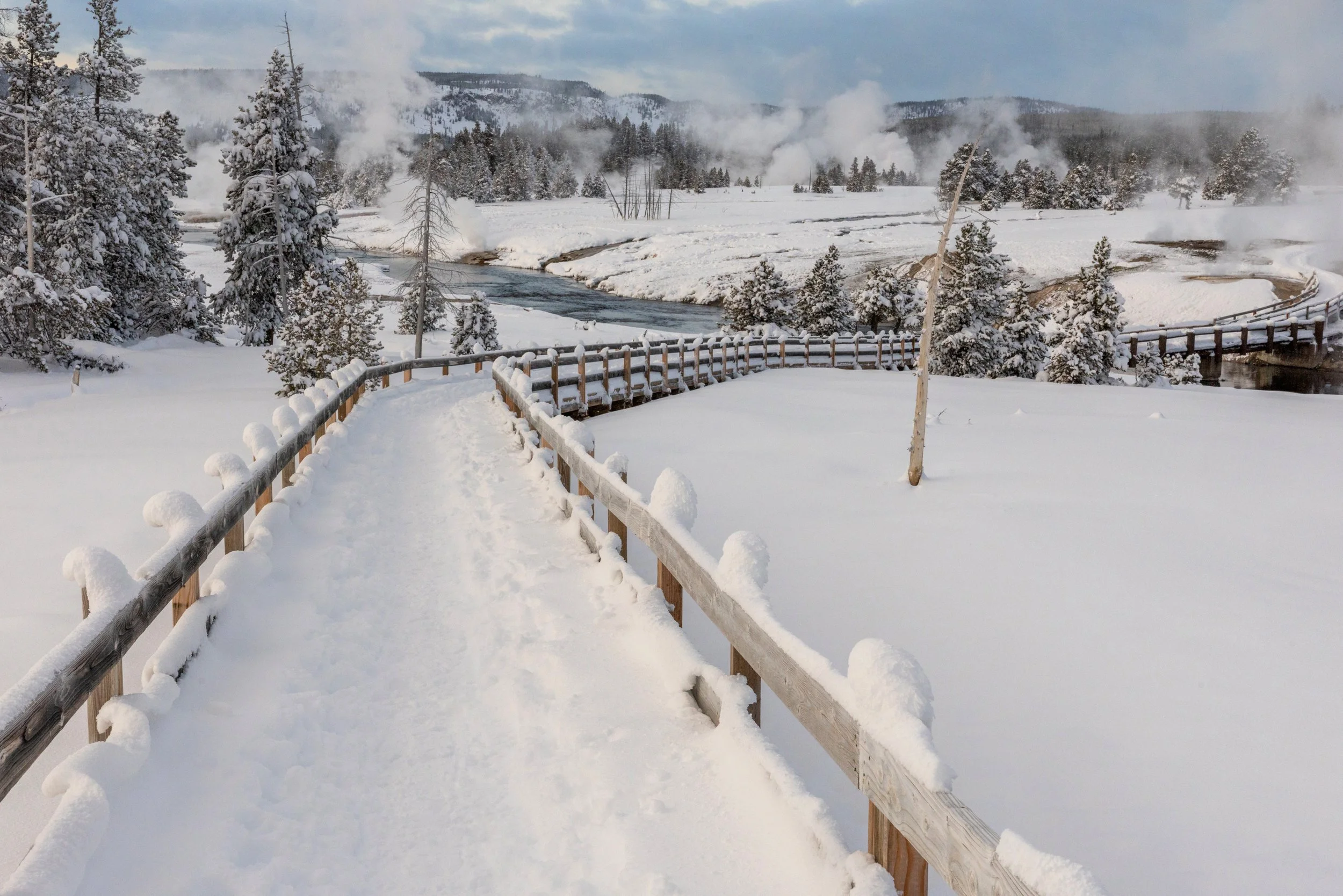
Yes, Yellowstone winters can be cold, but with the right clothing, it’s usually quite comfortable. We provide a detailed Yellowstone Winter Photo Tours packing list to help you dress properly and prepare for the conditions. It’s crucial to respect the weather, as temperatures can drop quickly, especially at higher elevations or in windy conditions. Rapid changes are common, and it can get well below zero.
Unfortunately, every year we see visitors (not part of our group) wearing sweatpants, sneakers, and light coats. They often spend most of their trip sitting in the snowcoach to stay warm. For tips on dressing for winter, check out my article here.
How long have you been photographing Yellowstone?
I have been photographing Yellowstone for over 30 years and leading photo workshops and tours there for more than a decade. Each year, I spend about six weeks exploring and photographing the Greater Yellowstone area, including Grand Teton National Park and nearby national forests. It’s truly one of my favorite places in the country.
Learn more and register here: Yellowstone Winter Photo Tours
Two Paths to Wild Beauty.
We are one team of photography experts offering tours through two dedicated websites, ensuring you get the most specialized experience possible.
Explore Alaska Adventures: Your source for exclusive Alaskan photo tours, from private yachts to intimate bear encounters.
Slonina Nature Photography: Your guide to award-winning workshops in North America's most iconic parks, like Yellowstone and the Canadian Rockies.
One team, one mission, two websites to begin your next adventure.